Medical AM
The medical additive manufacturing sector, which for the broadest scope also encompasses dental and bioprinting, is today one of the largest adopters of 3D printing technologies for the production of consumer-targeted end-use items, including prosthetics and orthotics, implants, devices and physical models. One of the biggest selling points for additive in this context is the ability to personalize and customize products to the patient, from patient-specific surgical guides that help surgeons prepare for an operation, to customized orthotics, to 3D printed implants tailored to the patient’s anatomy and needs.
While the benefits of AM technologies for personalized medicine and more efficient surgical practices are well documented, several hurdles still exist that are limiting a more widespread adoption of these key technologies in hospitals and medical practices. Several of these hurdles are inherent to AM technologies and related material availability, however, the biggest challenges result from a lack of standards and a general lack of awareness, resulting in a slow pace of adoption.
That said, applications for AM in healthcare, including surgical guides and pre-surgical models are today so widespread they can in a way be compared to the broad adoption of AM for prototyping and tooling in the industrial manufacturing arena. On the standards and regulations front, advances are also being made which are paving the way for broader AM adoption.
Leading AM hardware manufacturers, such as 3D Systems, EOS, Desktop Metal’s ETEC (formerly EnvisionTec) and SLM Solutions, along with leading global service providers like Oerlikon, Jabil and Materialise, are investing heavily to develop both medical and dental AM applications. Medical product powerhouses like Stryker, DePuy Synthes, Zimmer Biomet (these two merged in 2015), and Smith & Nephew, are conducting R&D with AM for a range of innovative devices. Stryker was among the earliest adopters along with medium size international firm Lima Corporate.
Below are some of the key subsegments of the medical AM vertical that we cover in this AM Focus.
Medical implants
In the medical implant market, 3D printed implants represent a growing subsegment. VoxelMatters’ Index currently lists over 80 implant manufacturers of varying sizes, some of which have been utilizing AM in a significant manner for more than a decade and are beginning to look beyond just the design and production of existing implant types in titanium using additive manufacturing. Among the most common 3D printed implants today are customized orthopedic implants with porosity for optimal osseointegration. These include spinal implants, bone plates and more. 3D printed reconstructive implants, such as maxillofacial implants, are also gaining in prominence as they can be designed to match a patient’s specific anatomy.
Pharmaceutical
Additive manufacturing also has important applications in the pharmaceutical industry, where specialized printing technologies can produce medication with patient-specific dosages and personalized drug release profiles. This capability is part of a shift away from mass production for medication towards tailored medications. In drug development, AM is also playing a role, as the technology can be used for rapid prototyping purposes to produce small batches of drugs to be tested in pre-clinical animal models. The ability to bioprint tissues will also have a seismic impact on drug discovery, as medications can be tested on engineered tissues that mimic human tissues.
Dental
The dental segment is a key area for the use of additive manufacturing across healthcare industries, in terms of hardware sales, material sales (especially, but not limited to, photopolymers) and numbers of parts produced (including models, dental trays, surgical guides, temporaries, crowns and implants). In fact, dental additive manufacturing was the first segment to achieve the production of certain end-use parts, effectively fueling growth for all main traditional polymer additive manufacturing hardware and material stakeholders. The use of 3D printing in the laboratory and the dentist’s office has been steadily growing for the past several years. Now the dental opportunity has emerged as one of the most relevant for the AM industry as a whole, with literally hundreds of thousands of potential adopters all over the world.
Bioprinting
Although complex organ production for human transplant remains a very long term objective, simpler bioprinted organs and tissue grafting for human use now seem increasingly within reach, especially for cartilage, bone,and skin. Commercial implementation of bioprinting technologies is already underway in the fields of drug development testing (DDT) and cosmetics development and testing. Adoption has also been booming within the regenerative and bioengineering areas of research at major academic institutions operating in these fields around the world.
-
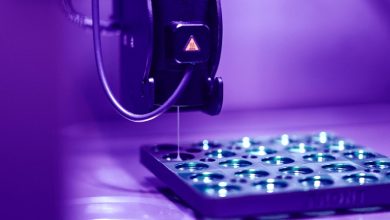
AtrimusRx becomes first Swedish community pharmacy validated for 3D printed drug compounding
AtrimusRx has become the first community pharmacy operator in Sweden to receive regulatory validation for incorporating additive manufacturing into its extemporaneous pharmaceutical compounding process. The milestone signifies a shift in…
-

3DPets and Creality bring customized prosthetics to pets
There is significant coverage of how 3D printing is used to produce custom-fit prosthetic devices for humans, but there is a whole other user segment for prosthetics that is less…
-
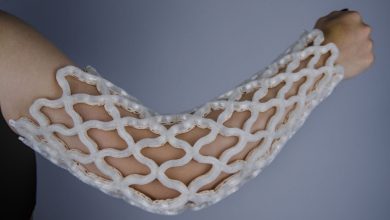
Castomize’s heat-molded 3D printed orthopedic cast has reduced costs by up to 25%
A Singapore-based startup, Castomize, has developed a 3D printed open cast for wrist, arm and ankle fractures that is breathable, lightweight, and fully waterproof, and which helps avoid common side…
-

SprintRay gets FDA clearance to 3D print porcelain dental crowns
Dental 3D printing company SprintRay has received US Food and Drug Administration (FDA) clearance to print porcelain crowns — a regulatory milestone that opens up what its chief executive has…
-

LightForce Orthodontics launches patient-specific 3D printed metal bracket
LightForce Orthodontics has brought LightBracket Metal, a patient-specific 3D printed metal bracket, to market, describing it as the first of its kind. The product extends the company’s generative braces system into…
-
Amnovis establishes US operations and acquires Westconn Precision Technologies’ AM activities
Belgian additive manufacturing contract manufacturer Amnovis has established a new operational entity in the United States and, at the same time, acquired the additive manufacturing activities of Westconn Precision Technologies.…
-
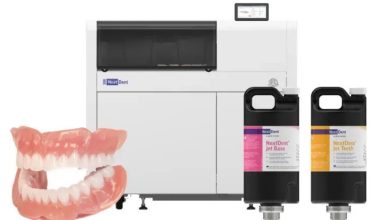
3D Systems’ NextDent Jetted Denture Solution EU certified two months ahead of schedule
3D Systems has received Class IIa certification under the European Union Medical Device Regulation for its NextDent Jet Base and NextDent Jet Teeth materials. The certification, secured ahead of a…
-
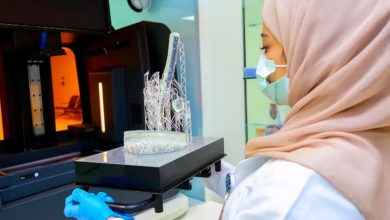
King Faisal Specialist Hospital’s in-house 3D printing program cuts operative time by 30%
King Faisal Specialist Hospital and Research Center’s (KFSH) in-house 3D printing program is reducing operative times by up to 30%, while improving clinical predictability and patient outcomes. The program allows…
-
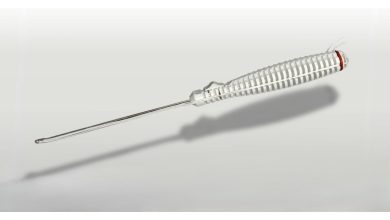
Lincotek receives FDA clearance for SportLinc syndesmosis device
Lincotek has obtained 510(k) clearance (K252081) from the US Food and Drug Administration (FDA) for its SportLinc Syndesmosis Device, a sterile, single-use implant developed to stabilize syndesmotic trauma of the…
-

Pete Pharma and Fagron form exclusive North American distribution deal for pharmaceutical 3D printing
US-based pharmaceutical innovator Pete Pharma has formed a distribution and commercialization partnership with Fagron Inc., a global pharmaceutical compounding firm, to extend the reach of pharmaceutical 3D printing across the…


