AM for Energy
With a significant increment in the rate of adoption over the past five years, additive manufacturing has found applications in different sectors of the power generation and energy industry, both in building prototypes and in mainstream production, leading to process simplification and operational efficiency.
AM can produce components with complex geometries, as well as consume fewer raw materials, produce less waste, reduce energy consumption and decrease time-to-market for new and more efficient energy applications. Manufacturers look to AM for solutions with reduced costs and shorter time frames. In analyzing the power generation segment and the possible impact that additive manufacturing will have on it, it is clear that AM finds applications in the nuclear, oil and gas, as well as renewable energy industries, where it contributes to innovation and progress.
In the nuclear energy industry, additive manufacturing plays a crucial role in the production of complex components and prototypes. It enables the rapid fabrication of intricate designs, reducing lead times and costs associated with traditional manufacturing methods. This technology allows for the creation of specialized parts with enhanced durability and precision, which are essential for ensuring the safety and reliability of nuclear power plants. Additionally, 3D printing can be used to produce radiation-resistant materials and tools for maintenance and repair in radioactive environments.
In the oil and gas sector, additive manufacturing offers significant advantages in the development of drilling equipment and downhole tools. The ability to create custom-designed, lightweight, and high-strength components allows for improved performance and efficiency in extracting and processing hydrocarbons. Additionally, 3D printing can be used to manufacture spare parts on-site, reducing downtime and logistics costs in remote oilfields.
Renewable energy sources such as wind, geothermal, and solar power also benefit from additive manufacturing. For wind energy, 3D printing facilitates the production of aerodynamic components, such as turbine blades, that can be optimized for efficiency and durability. In geothermal applications, it allows for the creation of heat exchangers and geothermal well components with improved thermal conductivity. Solar energy benefits from 3D-printed solar panels and energy storage solutions that are both cost-effective and sustainable.
Furthermore, additive manufacturing contributes to the development of innovative energy storage solutions, including advanced battery designs and supercapacitors. These developments help address the intermittent nature of renewable energy sources by enhancing energy storage capacity and efficiency.
Additive manufacturing is revolutionizing the energy industry across various sectors, driving advancements that are essential for a cleaner and more reliable energy future. As this technology continues to evolve, its impact on the energy sector will only grow, ushering in a new era of energy production and distribution.
-

Rosatom to lead implementation of 3D metal printing in Kyrgyzstan’s hydropower sector
Rosatom, the Russian State Agency for Atomic Energy, has signed an agreement to implement additive technologies in Kyrgyzstan’s hydropower sector, the corporation has stated. Signed in the Kyrgyz capital Bishkek,…
-
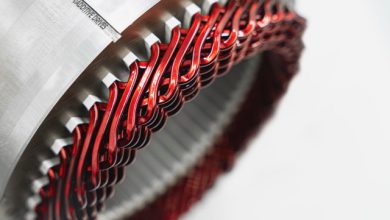
Investment injection sets Additive Drives on growth push
Additive Drives, developers of additively manufactured electric motor components, has had a round of fresh investment as it takes on the next phase of its global energy consumption reduction mission.…
-
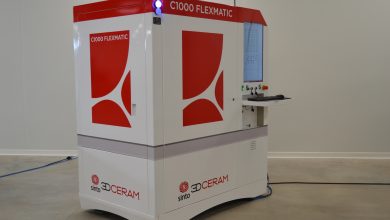
3DCeram Sinto targets industrial-scale SOEC parts with large-format ceramic SLA
Ceramic AM specialist 3DCeram Sinto is positioning its ceramic SLA platform for the production of next-generation Solid Oxide Electrolysis Cell (SOEC) components within the European CLEANHYPRO project. 3DCERAM’s C1000 Flexmatic…
-

Voestalpine Additive Manufacturing gains API 20S certification for oil and gas components
Voestalpine Additive Manufacturing has earned certification to American Petroleum Institute’s Specification 20S, qualifying the company to produce additively manufactured metallic parts for oil and gas applications at a serial scale.…
-

Full-stack 3D printed battery maker gets seed funding to develop innovative product
An innovative new company that’s aiming to scale hybrid manufacturing technology to 3D print high-performance energy storage systems has confirmed a $7.1m seed round of funding, co-led by Outlander VC…
-
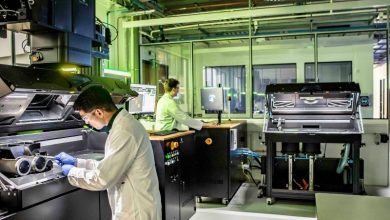
UK Research and Innovation body backs ambitious fusion energy initiative
A project led by researchers at the Centre for Additive Manufacturing (CfAM) at the University of Nottingham in the UK will aim to explore new opportunities for building fusion machines.…
-
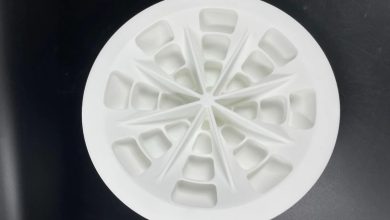
EOS 3D printing unlocks new paradigm for spare parts in oil & gas
Across various industries like aerospace, defense, energy, and transport, additive manufacturing technologies are paving the way to greater efficiency and supply chain resilience, particularly where spare parts are involved. The…
-
How end-users lead AM’s shift to production in the energy sector
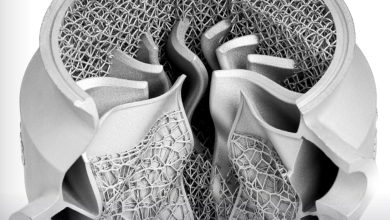
Additive manufacturing is moving from trials to central production workflows across the energy sector. The clearest indicator is revenue momentum tied to direct part production rather than prototyping in many…
-

Discover the MIMETE alloys powering energy AM
Not many companies in the additive manufacturing industry can claim the same legacy in the energy sector as FOMAS Group. The Italian company, first founded in 1956, has been forging…
-
Unlocking gains in the energy and decarbonization sectors with AM
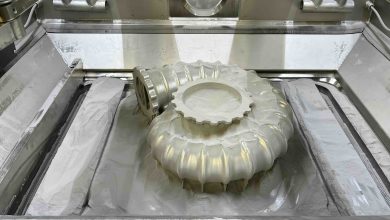
As a technology very much founded on the principle of efficiency, it is no wonder that additive manufacturing has been warmly welcomed by players in the energy and decarbonization sectors.…


