Automotive AM
Automotive additive manufacturing has been embedded in the core of the auto industry through rapid prototyping since the earliest AM technologies emerged at the end of the 1980s. In 1987, General Motors was one of the four companies to install the SLA-1, the first 3D printer ever created, from 3D Systems. AM has gradually entered new areas of the automobile industry, such as motorsports and luxury limited editions, and is now looking to open up new possibilities in mass customization.
The next and final phase of automotive additive manufacturing adoption is one in which AM radically alters supply chain and production dynamics, becoming the standard for tooling and enabling new possibilities in spare parts and obsolescence management. The ultimate goal remains the introduction of AM technologies to digitalize and further automate serial mass production. In particular, the EV revolution stands to both benefit and further drive the adoption of AM, starting with a strong demand for prototyping and developing an entirely new generation of vehicles and eventually continuing through weight optimization and integrated subassemblies, becoming a key requirement to extend mileage and reduce energy consumption within increasingly “solid-state” vehicles.
As one of the first major consumer product industries to do so, this paradigm shift has extremely significant implications and potential for both AM and the global manufacturing industry. The impact of automotive additive manufacturing extends to all sectors of parts production, from raw materials to international distribution. Given the sheer scale of the global automotive market, the prospects are incredibly important for the development of automotive additive manufacturing technology.

In the past few years, we’ve seen attempts by high-throughput polymer AM technology providers (especially thermal powder-bed fusion processes such as MJF, SAF and HSS) and high-speed photopolymerization (DLS, cDLM, etc.) to scale AM adoption in automotive. In metal we are seeing new and established systems, such as the EOS M300, or the large multi-laser solutions from SLM Solutions (the 12-laser NXG 600 system) and various Chinese manufacturers such as BLT and Eplus3D, along and metal binder jetting systems such as Desktop Metal’s P-5 Production Systems, GE Additive’s H3 series, HP’s MetalJet, and ExOne’s X1 160Pro targeted specifically at the automotive market segment.
However, the production requirements of the automotive segment—and its subsegments—are unique and strictly tied to both the underlying characteristics of the automotive segment (high productivity requirements, lower cost of materials, and high automation of production) and its changing trends (demand, regulations, scale economics, geopolitical situations, and supply chain dynamics) and macro trends (propulsion systems, mass customization, smart mobility, connectivity and digitalization).
For this reason, other more established AM technologies, such as sand casting and molding using 3D printed cores (in polymer or ceramics) or 3D printed molds (in sand), are now emerging as ideal transitional processes for serial automotive manufacturing. In a growing number of cases, illustrated by Tesla, General Motors, and BMW (with both voxeljet and ExOne technologies), among others, sand binder jetting is emerging as a strategic solution for “gigacasting,” that is to produce very complex automotive parts and large components that combine multiple components into a single one.
Most manufacturers of 3D printing technology have established strong ties and experience developing and selling solutions to the auto industry. However, the additive manufacturing industry at large is still only just waking up to the challenges associated with vertically integrated manufacturing solutions.
The next phase of innovation, adoption, and industrialization of automotive additive manufacturing involves scaling up final parts production. For AM technologies to complete the necessary transition, several steps must be taken. These include continued investments in technology R&D by major stakeholders in both the AM and automotive industries; increased AM integration into the end-to-end manufacturing workflow to reduce costs and increase speed; and continued development of DfAM (Design for Additive Manufacturing) optimizations.
Now, while major adopters like BMW focus on AM mostly for production tools, other brands like CUPRA and Bentley leverage AM to enhance their design capabilities, turning their car interiors into customizable “jewelry.” In this new AM Focus, together with some of the most important automotive and AM industry stakeholders and experts, we build upon our previous Focus editions (dating back to 2020) to continue to shed light on the latest developments for automotive additive manufacturing in terms of hardware technologies, material science and production automation, presenting an additional analysis of how AM has been and will continue to revolutionize the automotive sector.
-

Toyota and Wipro 3D partner to build AM Center of Excellence in India
India’s bid to become an additive manufacturing pioneer continues with the signing of a Memorandum of Understanding between Toyota Kirloskar Motor (TKM) and Wipro 3D to establish a Center of…
-
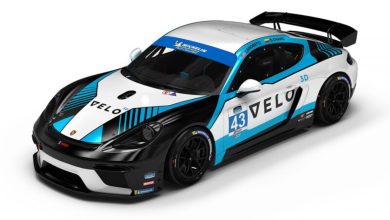
Velo3D partners with Andretti Performance for 2026 IMSA Michelin Pilot Challenge
Velo3D, the company specializing in advanced metal additive mission-critical parts, has entered into an agreement with racing team Andretti Performance. The deal, in which Velo3D becomes an official sponsor and…
-
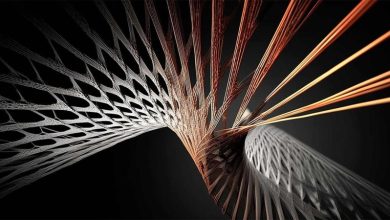
CUPRA brings “Beyond the Known” to Milan Design Week 2026 with an exploration of parametric design
For the past few years, CUPRA has made Milan Design Week one of the biggest events on its calendar to present the latest design innovations. In 2025, VoxelMatters had the…
-
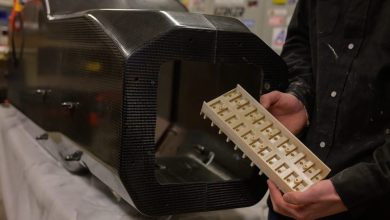
3D printing unlocks innovation for McGill’s Formula Electric team
Every year, student teams from around the world put their efforts towards building the fastest electric race cars and test their designs at the Formula SAE Electric competition. The tradition,…
-
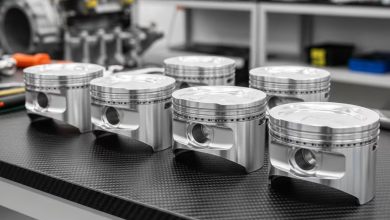
How F1 teams are using 3D printed pistons to circumvent compression rules
Formula 1’s governing body, the FIA, introduced a revised compression ratio ceiling of 16:1 for the 2026 season, down from the previous limit of 18:1, with the aim of reducing…
-

MINI releases limited 1965 Victory Edition featuring 3D printed components
MINI has released a limited-edition model range which draws on the brand’s 1965 Monte Carlo Rally victory to inform design, specification, and naming of the new car. The MINI 1965…
-
BMW Group targets 2027 for WAAM series production
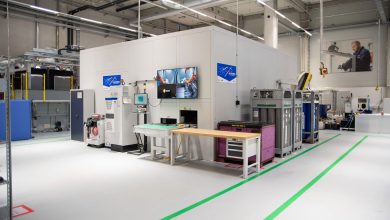
BMW Group is moving to begin series production of components using wire arc additive manufacturing (WAAM) from 2027, marking a significant milestone in the car manufacturer’s efforts to industrialize 3D…
-

Porsche 911 reimagined: the SPICA project
In 2022, a Polish car collector decided to restore a Porsche 911 and convert it to electric drive. At first, he had a few minor visual changes in mind. Over…
-

BYD achieved 30% weight saving with record-breaking AM chassis
When BYD’s Yangwang U9X set a new world record for production vehicles at the Nurburgring in Germany in October, it was lauded as a significant advancement both in the capabilities…
-
Exploring additive manufacturing in the 2026 Formula 1 Technical Regulations
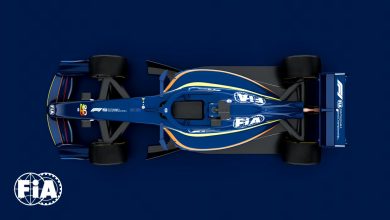
The newly released 2026 Formula 1 Technical Regulations introduce significant updates concerning additive manufacturing (AM), reflecting the evolving role of this technology in motorsport engineering. These regulations establish the materials,…


