3D Scanning and Metrology
In the rapidly evolving context of additive manufacturing for digital series and customized production, 3D scanners and metrology ensure that parts produced via AM not only meet design specifications but also comply with industry standards for performance and safety.
Unlike traditional manufacturing, where the repeatability of processes such as injection molding or CNC machining is well established, AM introduces new complexities. The layer-by-layer process can lead to variability in dimensions, surface finishes, and mechanical properties.
Here’s why metrology is critical in additive manufacturing:
- Quality Assurance: Providers must demonstrate that parts meet dimensional tolerances and material specifications.
- Customer Confidence: Users need validation that printed components can perform as reliably as traditionally manufactured parts.
- Regulatory Compliance: Sectors such as aerospace, automotive, and healthcare require rigorous inspection and certification of every part.
- Process Optimization: By scanning and analyzing parts, manufacturers can refine printing parameters, reducing scrap rates and costs.
How AM is driving metrology demand
3D scanners have become a natural extension of additive manufacturing workflows, offering unprecedented precision and speed. Modern scanners can capture millions of data points in seconds, generating highly detailed digital replicas of physical parts. This technology enables reverse engineering by scanning legacy components for re-manufacture or redesign, supports first article inspection by comparing printed parts directly against CAD models to identify deviations, facilitates in-process monitoring to detect defects early in production runs, and ensures design validation by confirming that complex geometries—such as internal channels or lattice structures—are printed as intended.
For AM service providers, the ability to integrate 3D scanning and metrology is no longer an option but a clear differentiator. By offering metrology services, providers can deliver data-backed certification to their customers, compete effectively in highly regulated industries where traceability is mandatory, enhance trust and credibility by guaranteeing dimensional accuracy, and minimize rework and material waste by detecting errors early. This powerful combination of AM and metrology enables providers to evolve from simple print bureaus into full-service manufacturing partners capable of meeting the most demanding industry requirements.
On the user side, industries such as medical device manufacturing, aerospace, and automotive increasingly rely on metrology as they adopt additive manufacturing. Metrology reduces risk by ensuring critical components meet safety and functional requirements, supports scalability by allowing companies to move from prototyping to end-use production with confidence in part consistency, and strengthens supply chains by providing inspection reports and certifications alongside components. It also enables innovation by giving companies the freedom to explore new geometries and designs without compromising quality. Ultimately, the integration of metrology into AM workflows builds trust, ensuring reliability and accelerating the broader adoption of additive manufacturing across industries.
The future of metrology in additive manufacturing
The integration of AI-driven analytics, real-time in-situ scanning, and automated inspection systems will further enhance the power of metrology. Instead of being a post-production step, scanning and inspection will increasingly become embedded within the AM process itself. This will enable closed-loop feedback systems where printers can self-correct during builds, paving the way for true industrial-scale additive manufacturing.
The growing role of 3D scanners and metrology in additive manufacturing underscores how precision and reliability are just as important as innovation. For service providers, metrology provides a competitive advantage, ensuring quality and compliance. For end users, it builds trust, enabling the use of AM in mission-critical applications. Together, these advancements are bringing additive manufacturing closer to its full potential—bridging the gap between experimental prototyping and robust industrial production.

3D scanning and 3D printing have gone together since their earliest days. The symbiotic relationship between the two makes perfect sense: 3D scanners capture three-dimensional shapes using light to create…
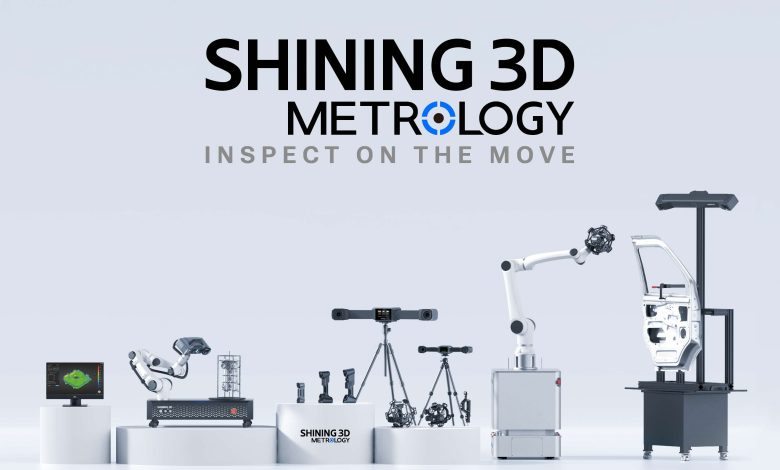
SHINING 3D, a developer of 3D scanning technology, has launched its new high-end measurement brand—SHINING 3D Metrology—alongside the debut of its next-generation scanner, the OptimScan Q12. Born from over 20…
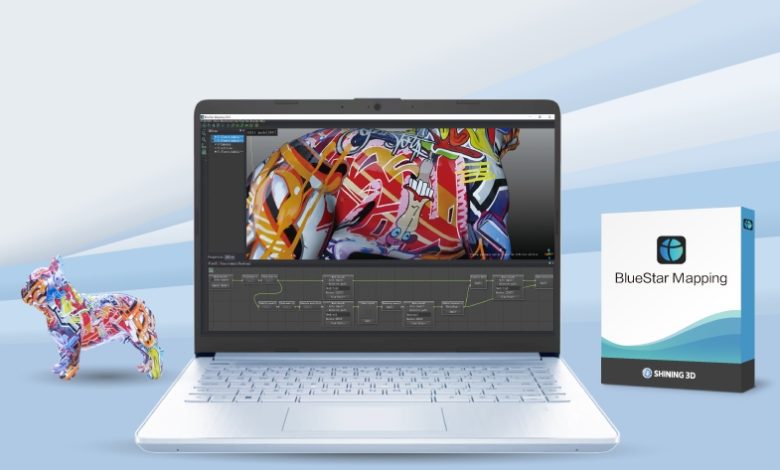
SHINING 3D, a developer of 3D scanning technology, has launched BlueStar Mapping, a next-generation texturing software that streamlines the process of creating highly accurate, true-color 3D models. Now available for…
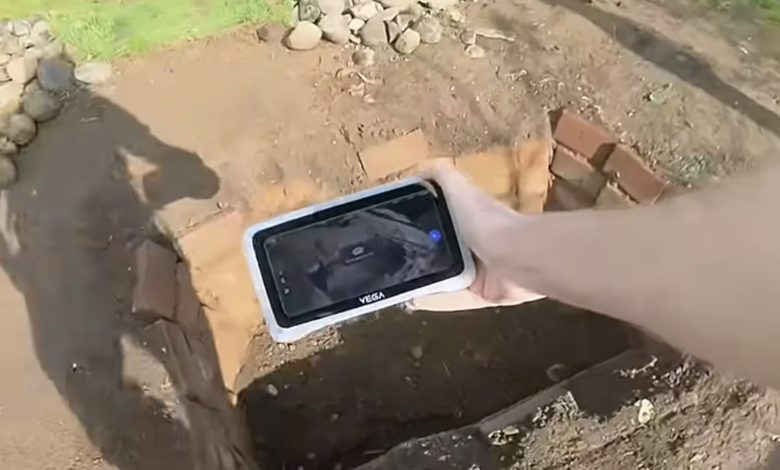
Since its introduction, SHINING 3D’s EINSTAR VEGA has emerged as a go-to wireless all-in-one 3D scanner, uniquely combining dual scanning technologies to enhance the usability and portability of 3D scanning.…

Cooksongold, a UK supplier of precious metals, tools, and services for the jewelry industry, has used Artec 3D’s Micro 3D scanner to halve the time it takes to create high-accuracy…

Artec 3D, a global specialist in professional 3D scanning solutions, collaborated with its Gold-certified Partner Altem Technologies to bring its latest innovation, the metrology-grade Artec Point 3D scanner, to the…

Creaform, a provider of automated and portable 3D measurement solutions, has released Scan-to-CAD Pro, a new application module integrated within the Creaform Metrology Suite designed to streamline and enhance reverse…
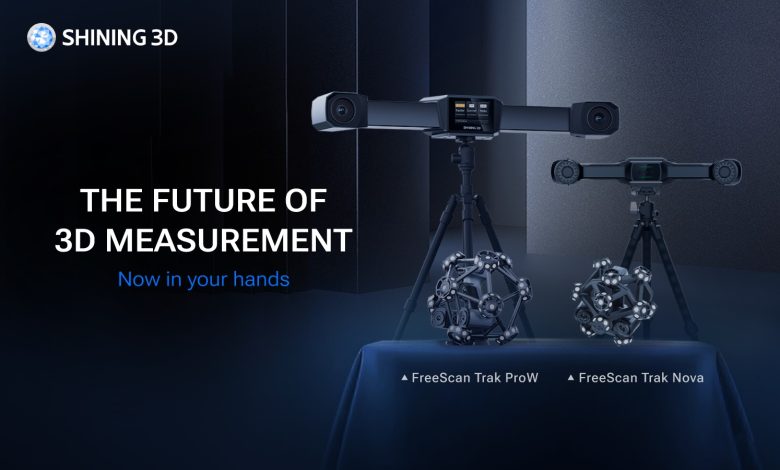
SHINING 3D, a 3D scanning technology company, has launched its latest FreeScan Trak Nova and FreeScan Trak ProW industrial metrology solutions – combining advanced wireless technology, high precision, and seamless…

Hexagon, a precision technologies company, and Oracle Red Bull Racing have renewed their long-established innovation partnership for multiple years. For 18 years, Hexagon’s Manufacturing Intelligence division has been a trusted…

Structure, a 3D intelligence company, has signed a 3D software licensing agreement with the multinational printing company HP. Under the agreement, HP will offer the AI-powered Structure Software Development Kit…


