In the rapidly evolving context of additive manufacturing for digital series and customized production, 3D scanners and metrology ensure that parts produced via AM not only meet design specifications but also comply with industry standards for performance and safety.
Unlike traditional manufacturing, where the repeatability of processes such as injection molding or CNC machining is well established, AM introduces new complexities. The layer-by-layer process can lead to variability in dimensions, surface finishes, and mechanical properties.
3D scanners have become a natural extension of additive manufacturing workflows, offering unprecedented precision and speed. Modern scanners can capture millions of data points in seconds, generating highly detailed digital replicas of physical parts. This technology enables reverse engineering by scanning legacy components for re-manufacture or redesign, supports first article inspection by comparing printed parts directly against CAD models to identify deviations, facilitates in-process monitoring to detect defects early in production runs, and ensures design validation by confirming that complex geometries—such as internal channels or lattice structures—are printed as intended.
For AM service providers, the ability to integrate 3D scanning and metrology is no longer an option but a clear differentiator. By offering metrology services, providers can deliver data-backed certification to their customers, compete effectively in highly regulated industries where traceability is mandatory, enhance trust and credibility by guaranteeing dimensional accuracy, and minimize rework and material waste by detecting errors early. This powerful combination of AM and metrology enables providers to evolve from simple print bureaus into full-service manufacturing partners capable of meeting the most demanding industry requirements.
On the user side, industries such as medical device manufacturing, aerospace, and automotive increasingly rely on metrology as they adopt additive manufacturing. Metrology reduces risk by ensuring critical components meet safety and functional requirements, supports scalability by allowing companies to move from prototyping to end-use production with confidence in part consistency, and strengthens supply chains by providing inspection reports and certifications alongside components. It also enables innovation by giving companies the freedom to explore new geometries and designs without compromising quality. Ultimately, the integration of metrology into AM workflows builds trust, ensuring reliability and accelerating the broader adoption of additive manufacturing across industries.
The integration of AI-driven analytics, real-time in-situ scanning, and automated inspection systems will further enhance the power of metrology. Instead of being a post-production step, scanning and inspection will increasingly become embedded within the AM process itself. This will enable closed-loop feedback systems where printers can self-correct during builds, paving the way for true industrial-scale additive manufacturing.
The growing role of 3D scanners and metrology in additive manufacturing underscores how precision and reliability are just as important as innovation. For service providers, metrology provides a competitive advantage, ensuring quality and compliance. For end users, it builds trust, enabling the use of AM in mission-critical applications. Together, these advancements are bringing additive manufacturing closer to its full potential—bridging the gap between experimental prototyping and robust industrial production.
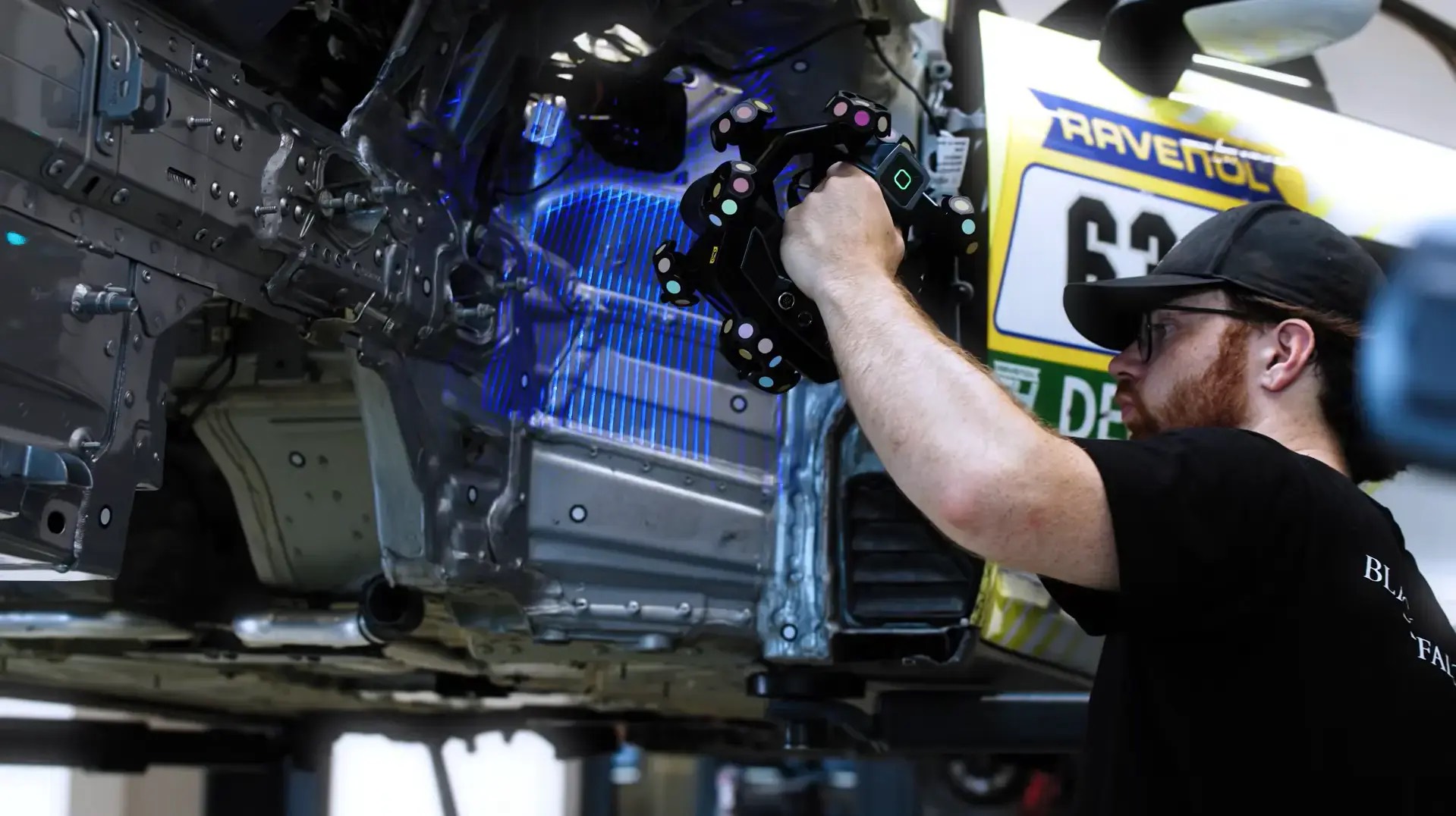
Black Falcon, a motorsport team based at Germany's Nürburgring, has used SHINING 3D scanning technology to verify repairs on a…
Backflip AI launched a CAD copilot built on a new foundation model that converts 3D scans, STL files, and other…
Engineers and archaeologists at Koç University's Manufacturing and Automation Research Center (MARC) and Mustafa V. Koç Maritime Archaeology Research Center…
SHINING 3D has received Level 4 (System-Level) certification under the Innovation and Intellectual Property Management Capability evaluation based on ISO…
Railway manufacturers producing high-speed trains, metro vehicles and freight rolling stock are increasingly turning to high-precision 3D scanning to inspect…
China's National Cultural Heritage Administration introduced regulations restricting traditional rubbing practices on stone inscriptions, citing the physical damage the technique…
SHINING 3D hosted Metrology Day events in Chonburi, Thailand; Tampa, Florida; Querétaro, Mexico; and Brisbane, Australia, during the first half…
Liuzhou Hyunion Automotive Components, a subsidiary of Hyunion Holding Co., Ltd. and a Tier-1 supplier to SAIC-GM-Wuling, has replaced part…
Defense technology company QinetiQ has established an additive manufacturing facility at HM Naval Base Clyde in Faslane, Scotland, designed to…
Okyena Collective, a Bremen-based creative studio founded by digital archivist and 3D artist Fara-Farai Awindor and fine artist Merci Ewuresi,…


