AM for Energy
With a significant increment in the rate of adoption over the past five years, additive manufacturing has found applications in different sectors of the power generation and energy industry, both in building prototypes and in mainstream production, leading to process simplification and operational efficiency.
AM can produce components with complex geometries, as well as consume fewer raw materials, produce less waste, reduce energy consumption and decrease time-to-market for new and more efficient energy applications. Manufacturers look to AM for solutions with reduced costs and shorter time frames. In analyzing the power generation segment and the possible impact that additive manufacturing will have on it, it is clear that AM finds applications in the nuclear, oil and gas, as well as renewable energy industries, where it contributes to innovation and progress.
In the nuclear energy industry, additive manufacturing plays a crucial role in the production of complex components and prototypes. It enables the rapid fabrication of intricate designs, reducing lead times and costs associated with traditional manufacturing methods. This technology allows for the creation of specialized parts with enhanced durability and precision, which are essential for ensuring the safety and reliability of nuclear power plants. Additionally, 3D printing can be used to produce radiation-resistant materials and tools for maintenance and repair in radioactive environments.
In the oil and gas sector, additive manufacturing offers significant advantages in the development of drilling equipment and downhole tools. The ability to create custom-designed, lightweight, and high-strength components allows for improved performance and efficiency in extracting and processing hydrocarbons. Additionally, 3D printing can be used to manufacture spare parts on-site, reducing downtime and logistics costs in remote oilfields.
Renewable energy sources such as wind, geothermal, and solar power also benefit from additive manufacturing. For wind energy, 3D printing facilitates the production of aerodynamic components, such as turbine blades, that can be optimized for efficiency and durability. In geothermal applications, it allows for the creation of heat exchangers and geothermal well components with improved thermal conductivity. Solar energy benefits from 3D-printed solar panels and energy storage solutions that are both cost-effective and sustainable.
Furthermore, additive manufacturing contributes to the development of innovative energy storage solutions, including advanced battery designs and supercapacitors. These developments help address the intermittent nature of renewable energy sources by enhancing energy storage capacity and efficiency.
Additive manufacturing is revolutionizing the energy industry across various sectors, driving advancements that are essential for a cleaner and more reliable energy future. As this technology continues to evolve, its impact on the energy sector will only grow, ushering in a new era of energy production and distribution.
-
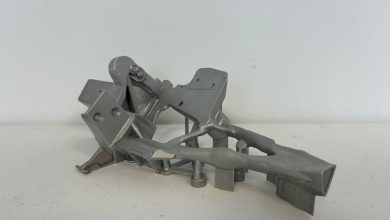
Valland turns automotive scrap aluminium into LPBF feedstock in ToZero project
The ToZero project—full name: Towards Zero Waste in Aluminum BiW Manufacturing—completed its final review after achieving its core objective: determining whether aluminum scrap from body-in-white automotive production could be converted…
-

VoxelMatters returns as official media partner for Formnext Technology Talks 2026
VoxelMatters is again serving as the official media partner for the Formnext Technology Talks, a year-round webinar series organized by Mesago Messe Frankfurt that runs through October 2026 ahead of…
-
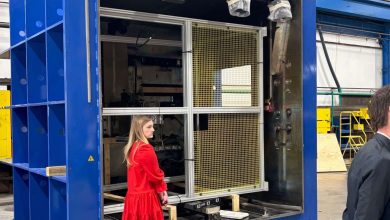
NX Atomics and Sciaky bring EBAM to small modular reactor components
Indiana company NX Atomics, a startup developing high-temperature small modular reactors (SMRs) for clean baseload power and industrial process heat, has formed a manufacturing partnership with Chicago-based Sciaky, Inc., an…
-
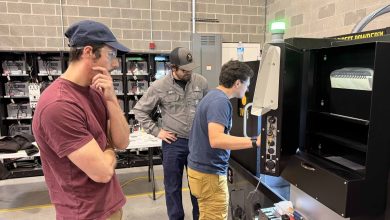
Metal Powder Works and Westinghouse extend nuclear AM powders contract
Metal Powder Works, a Pittsburgh-based specialty materials company, has entered the third phase of its product development program with Westinghouse Electric Company (WEC), extending a multi-year collaboration focused on metal…
-
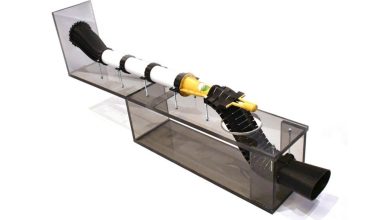
ORNL’s Manufacturing Demonstration Facility uses additive manufacturing to cut hydropower component costs
Fewer than 3% of the roughly 90,000 dams in the United States currently generate electricity, according to Oak Ridge National Laboratory (ORNL), and with around 51,000 of those classified as…
-
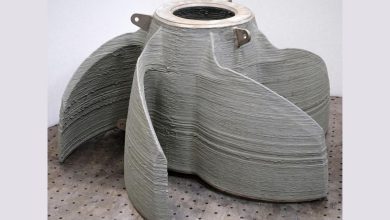
ORNL uses 3D printing to fabricate canisters for PM-HIP of large metal components
Researchers at the US Department of Energy’s Oak Ridge National Laboratory (ORNL) have developed a method for using additive manufacturing to produce custom canisters for powder metallurgy hot isostatic pressing…
-
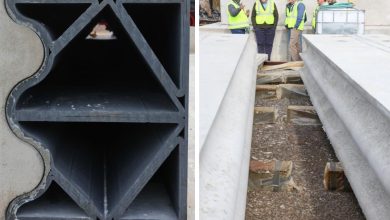
ORNL wins 2026 SME award for 3D printed precision nuclear reactor molds
A research team from the Department of Energy’s Oak Ridge National Laboratory (ORNL) has received the 2026 SME Aubin Additive Manufacturing Case Study Award at the SME AM Awards. The…
-
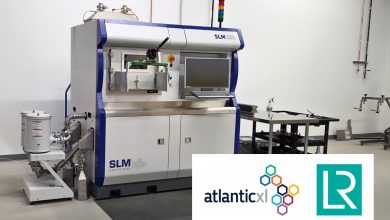
Atlantic XL secures Lloyd’s Register additive manufacturing qualification
Atlantic XL Inc., a provider of EPC and EPCM services to the energy industry, claims to have become the first company in North and South America to receive Additive Manufacturing…
-
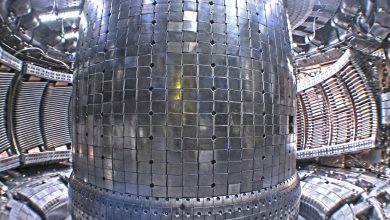
How the Durable Project uses AM to redesign fusion reactor wall components
DURABLE is a research project focused on using additive manufacturing to redesign the plasma-facing components (PFCs) of fusion reactors. The work aims to leverage optimized geometries, internal cooling channels, and…
-
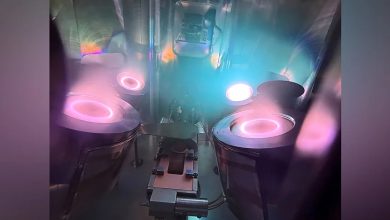
entX and University of Adelaide to scale nuclear battery production for space and defense
The University of Adelaide and South Australian nuclear technology company entX have secured funding to scale production of GenX, a betavoltaic nuclear battery designed for long-duration space and defense missions. …


