AM for Space
Space additive manufacturing is going to have a key role in enabling the future of human space travel and interplanetary colonization. In fact, it is already playing a key role in enabling the production of low-cost satellites and lighter, more efficient rockets to take cargos into orbit.
Whether it will take another 10, 50 or 100 years for commercial space-based ventures to grow into one of the largest—if not the largest—manufacturing segments, we are already past the dawn of the commercial space age and we just experienced the dawn of the commercial human space age. Commercial space exploration or commercial planetary colonization will soon be within our reach, as several companies of various sizes are now creating viable business opportunities in space for satellites and the communication industry.
One of the most significant challenges that all these space ventures need to overcome in order to place satellites, probes, landers, telescopes or even spacecraft in orbit is the high per kilogram cost required to break free of the Earth’s gravitational pull. This means that for every additional kilogram of payload, mission costs can increase by several orders of magnitude because heavier or bigger payloads require larger and more powerful launch vehicles.
Additive manufacturing provides the most effective tool to optimize weight in systems built to reach space. This is true both for launch vehicles and—until the time when resources are gathered in space—for spaceborne systems and devices. Together with weight-optimized geometries, AM can help to greatly lower the cost of commercial space activities by continuing to drive the development of advanced materials, including metal replacement, high-performance polymers and composites.

Space, the initial frontier
Additional direct advantages can be derived from increased process automation for small batch series or single item production—which is a more relevant issue in rocketry and satellite manufacturing than in any manufacturing segment. This is especially true within the $120-billion commercial infrastructure and support segments—including the manufacturing of spacecraft, in-space platforms and ground equipment, as well as launch services and independent research and development. While the overall revenues will continue to represent only a minimal part of the overall space manufacturing industry, AM has the potential to be one of the key elements that will help the commercial space industry grow into maturity.
Further down the road, with more people traveling in Space, AM more and more production will take place in Space as well. Nowhere is production more distributed than outside of our planet, and no technology can deliver on-location, distributed manufacturing of complex part more efficiently than additive manufacturing. Getting to orbit, getting through space, and staying in space will only be possible through AM.
Availability of construction materials (e.g., metals, water) in space (on asteroids or on surfaces of planetary bodies) creates the possibility to additively build settlements and other facilities without having to take expensive and bulky prefabricated materials out of Earth’s gravitational field. Lunar and Mars regolith, for example, could be used to construct pressurized habitats for human shelter as well as other infrastructure (landing pads, roads, blast walls, shade walls and hangars for protection against thermal radiation and micrometeorites). Several NASA and ESA funded projects explored the concept of using various additive manufacturing techniques to build infrastructure on the Moon and on Mars.
Exactly how it will happen is the Focus of 3dpbm’s Aerospace AM Focus 2020 for this entire month. We have lots of great content coming up so stay tuned.
-
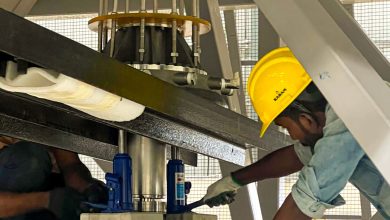
Astrobase Space Technologies receives India’s largest 3D printer for FFSC rocket engine production
Astrobase Space Technologies, a space travel startup in India, has received what it claims is the country’s largest 3D printer at its Bengaluru facility. Requiring four trucks to transport it,…
-
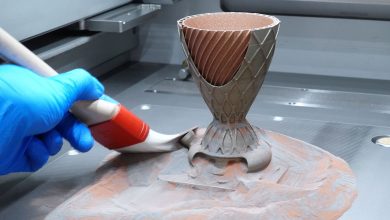
Fraunhofer develops multi-metal 3D printing process for rocket components
Researchers at the Fraunhofer Institute for Casting, Composite and Processing Technology have developed a 3D printing process capable of using multiple metals simultaneously to produce rocket components in a single…
-
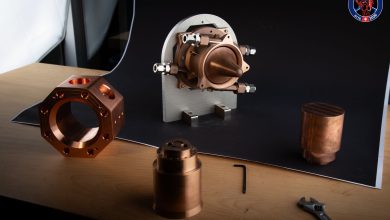
ARIS completes PEGASUS Gen1 rotating detonation engine with AM components
ARIS (Academic Space Initiative Switzerland), a student rocketry organization previously covered by VoxelMatters for its HEPHAESTUS bi-liquid propulsion work, completed development of its first rotating detonation engine, designated PEGASUS Gen1,…
-
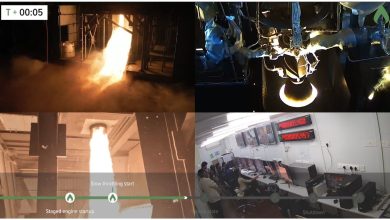
Agnikul Cosmos fires single-piece Inconel rocket engine in Chennai test
Agnikul Cosmos, a private Indian space transportation company, has successfully test-fired Agnite, a one-metre-long, semi cryogenic, fully 3D printed single-piece Inconel engine operated by electric motor driven pumps. The test…
-
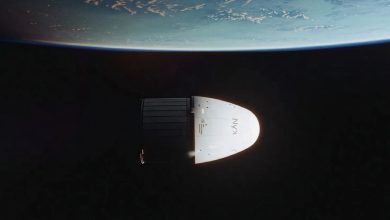
The Exploration Company licenses LEAP 71’s Noyron RP for next gen rocket engine development
The Exploration Company (TEC) has signed a five-year, renewable licensing agreement with LEAP 71 to deploy the Dubai-based firm’s Noyron RP technology in the development of its next-generation rocket engines.…
-
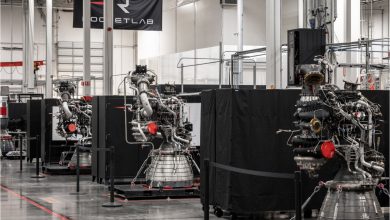
Rocket Lab targets 1,000th Rutherford engine launch as AM scales from Electron to Neutron
Rocket Lab disclosed that more than 800 Rutherford engines have flown to space aboard its Electron small launch vehicle, with the company targeting a total of 1,000 launches before the…
-
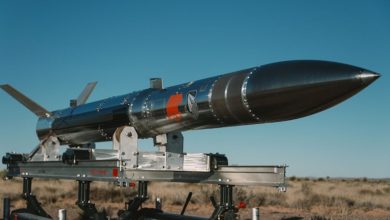
AFRL and Ursa Major complete flight demonstration of Draper liquid rocket engine
The Air Force Research Laboratory (AFRL) and Ursa Major, an advanced propulsion manufacturer and additive manufacturing adopter, have completed a flight of the Affordable Rapid Missile Demonstrator (ARMD), powered by…
-
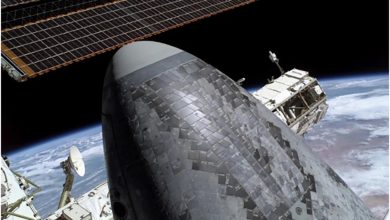
Researchers map in-space 3D printing possibilities using moon dust
A team of researchers from the University of Nebraska–Lincoln and Purdue University has outlined the key technical barriers to using powder-based additive manufacturing in space environments, with a focus on…
-
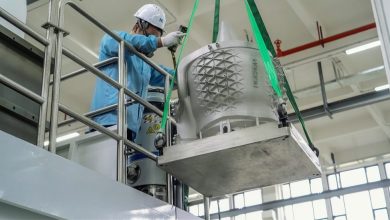
LEAP 71 and HBD show off giant 3D printed aerospike rocket engine with 200 kN of thrust
LEAP 71 and Hanbang United 3D Tech, also known as HBD, have produced a 3D printed aerospike rocket engine rated at 200 kilonewtons, or about 20 metric tons, of thrust.…
-
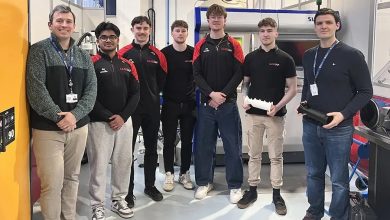
ULAS to design Ireland’s first 3D printed liquid rocket engine
ULAS HiPR, the University of Limerick’s (UL) student-led high-powered rocketry team, is designing and producing what it claims is the first additive manufactured liquid rocket engine in the Republic of…


