DfAM
The acronym DfAM – Design for Additive Manufacturing – has emerged in recent months to define all those practices and skills that enable a designer or an engineer to create objects which optimally leverage the geometric potential of additive manufacturing technologies.

These skills and practices include many software tools – often included in CAE (Computer Aided Engineering) programs as well as capabilities that are derived from personal experience. Next generation CAD and CAE software may provide support through a wide range of approaches. These include processes such as topology optimization – that is the ability to add material where it is needed and remove it where it is unnecessary – or the parametric generation of lattice and trabecular structures. There are highly intricate networks of structures that can confer a specific component the same or better mechanical properties than solid parts, using less material and thus reducing manufacturing costs. Furthermore, these types of structures can be produced only through layered additive manufacturing processes.
While these approaches are becoming adopted in advanced engineering, there were still largely unknown until just a few years ago, when only a handful of forward-looking creatives, artists and product designers began to experiment with them in combination with AM technologies. Today DfAM has grown to encompass concepts such as mass customization – the ability to serially manufacture custom products – as well as wearable technology and even personalized food manufacturing. These designers continue to show us the way products will be digitally and additively made in the future. Check out 3dpbm’s exclusive celebrity survey with some of the world’s greatest DfAM designers.
-
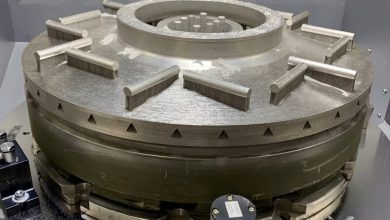
RMS 3D prints large centrifugal compressor impellers
RMS, an aftermarket turbomachinery company, was recently contracted by a refining customer to undertake a critical project focused on replacing two riveted impellers for a centrifugal compressor in plant air…
-

nTop launches nTop 5 with new integration partners
nTop, the leader in computational design software for high-performance engineering, released nTop 5, the next generation of its flagship product, which includes major integrations from five new partners to its…
-
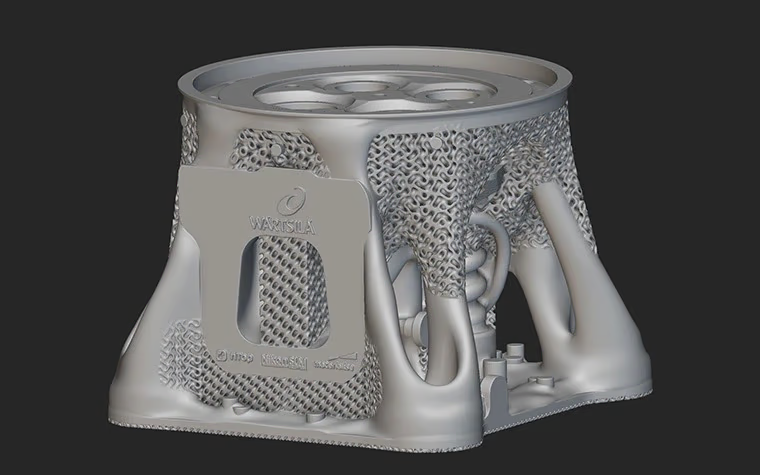
Materialise partners with nTop to accelerate part design for AM
Materialise and nTop are now collaborating via the integration of nTop Core, nTop’s implicit modeling API, with Materialise’s Magics 3D Print Suite and NxG Build Processor. This will allow manufacturers…
-
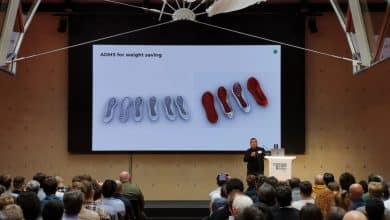
The latest DfAM innovations showcased at CDFAM Berlin
Just a week after the second edition of the CDFAM Berlin computational design symposium wrapped up at Frank Gehry’s AXICA building, the event organizers have released recordings of all the…
-

3YOURMIND and RusselSmith to develop oil & gas AM hub in Nigeria
3YOURMIND, a Berlin-based 3D printing software company, is partnering with RusselSmith, the first industrial additive manufacturing provider in West Africa, to enhance the identification, digitization, and additive manufacturing of parts…
-

3Dnatives launches ADDITIV Design World
After the success of their previous events, 3Dnatives has launched, through its event platform ADDITIV, the first-ever edition of ADDITIV Design World – dedicated to exploring the role of design…
-

CASTOR enables the visualization of 3D parts from 2D drawings
CASTOR, an industrial manufacturing software company, has introduced a new capability to automatically visualize 3D parts from 2D drawings. The software enables the simulation of a 3D view of every…
-

Metafold releases new edition of cloud-based DfAM platform
Metafold, a leading developer of cloud-based Design for Additive Manufacturing (DfAM) software based in Canada, has used Formnext 2023 to launch the latest edition of its engineering platform. The new…
-

Metafold raises $1.78 million to advance the mass adoption of industrial 3D printing
Metafold, one of the only providers of a cloud- and API-based 3D engineering platform, has raised $1.78 million USD in seed funding to advance the mass adoption of industrial 3D…
-

Unlocking better engineering with generative design
Autodesk has consistently been instrumental in increasing accessibility and knowledge about Generative Design software for engineering through the Fusion 360 platform. Initially introduced via Project Dreamcatcher within Autodesk’s research unit,…


