Medical AM
The medical additive manufacturing sector, which for the broadest scope also encompasses dental and bioprinting, is today one of the largest adopters of 3D printing technologies for the production of consumer-targeted end-use items, including prosthetics and orthotics, implants, devices and physical models. One of the biggest selling points for additive in this context is the ability to personalize and customize products to the patient, from patient-specific surgical guides that help surgeons prepare for an operation, to customized orthotics, to 3D printed implants tailored to the patient’s anatomy and needs.
While the benefits of AM technologies for personalized medicine and more efficient surgical practices are well documented, several hurdles still exist that are limiting a more widespread adoption of these key technologies in hospitals and medical practices. Several of these hurdles are inherent to AM technologies and related material availability, however, the biggest challenges result from a lack of standards and a general lack of awareness, resulting in a slow pace of adoption.
That said, applications for AM in healthcare, including surgical guides and pre-surgical models are today so widespread they can in a way be compared to the broad adoption of AM for prototyping and tooling in the industrial manufacturing arena. On the standards and regulations front, advances are also being made which are paving the way for broader AM adoption.
Leading AM hardware manufacturers, such as 3D Systems, EOS, Desktop Metal’s ETEC (formerly EnvisionTec) and SLM Solutions, along with leading global service providers like Oerlikon, Jabil and Materialise, are investing heavily to develop both medical and dental AM applications. Medical product powerhouses like Stryker, DePuy Synthes, Zimmer Biomet (these two merged in 2015), and Smith & Nephew, are conducting R&D with AM for a range of innovative devices. Stryker was among the earliest adopters along with medium size international firm Lima Corporate.
Below are some of the key subsegments of the medical AM vertical that we cover in this AM Focus.
Medical implants
In the medical implant market, 3D printed implants represent a growing subsegment. VoxelMatters’ Index currently lists over 80 implant manufacturers of varying sizes, some of which have been utilizing AM in a significant manner for more than a decade and are beginning to look beyond just the design and production of existing implant types in titanium using additive manufacturing. Among the most common 3D printed implants today are customized orthopedic implants with porosity for optimal osseointegration. These include spinal implants, bone plates and more. 3D printed reconstructive implants, such as maxillofacial implants, are also gaining in prominence as they can be designed to match a patient’s specific anatomy.
Pharmaceutical
Additive manufacturing also has important applications in the pharmaceutical industry, where specialized printing technologies can produce medication with patient-specific dosages and personalized drug release profiles. This capability is part of a shift away from mass production for medication towards tailored medications. In drug development, AM is also playing a role, as the technology can be used for rapid prototyping purposes to produce small batches of drugs to be tested in pre-clinical animal models. The ability to bioprint tissues will also have a seismic impact on drug discovery, as medications can be tested on engineered tissues that mimic human tissues.
Dental
The dental segment is a key area for the use of additive manufacturing across healthcare industries, in terms of hardware sales, material sales (especially, but not limited to, photopolymers) and numbers of parts produced (including models, dental trays, surgical guides, temporaries, crowns and implants). In fact, dental additive manufacturing was the first segment to achieve the production of certain end-use parts, effectively fueling growth for all main traditional polymer additive manufacturing hardware and material stakeholders. The use of 3D printing in the laboratory and the dentist’s office has been steadily growing for the past several years. Now the dental opportunity has emerged as one of the most relevant for the AM industry as a whole, with literally hundreds of thousands of potential adopters all over the world.
Bioprinting
Although complex organ production for human transplant remains a very long term objective, simpler bioprinted organs and tissue grafting for human use now seem increasingly within reach, especially for cartilage, bone,and skin. Commercial implementation of bioprinting technologies is already underway in the fields of drug development testing (DDT) and cosmetics development and testing. Adoption has also been booming within the regenerative and bioengineering areas of research at major academic institutions operating in these fields around the world.
-
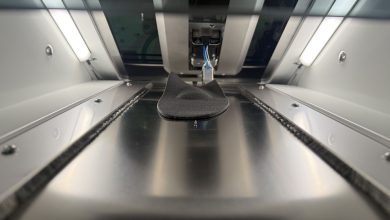
Qwadra secures exclusive license from BEGO Medical for belt 3D printing in foot orthotics
Qwadra, the parent company of PodoPrinter, secured an exclusive license agreement with BEGO Medical GmbH covering the use of a patent related to 3D belt printing technology for the continuous…
-
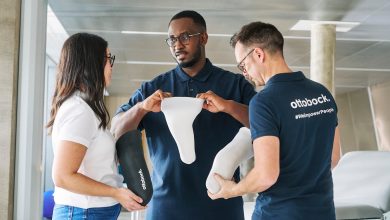
Ottobock brings 3D printed silicone liner to market with iconiq
Ottobock, an orthopedic technology company, has introduced iconiq, its first 3D printed silicone liner for leg prosthesis users, following a German premiere at OTWorld in Leipzig last week. The product…
-
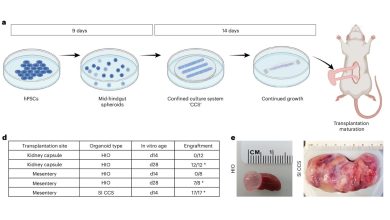
3D printed scaffold produces gut organoids twice as fast
Researchers at Cincinnati Children’s Hospital Medical Center, working with colleagues at Nantes Université, have developed a confined culture system (CCS) that produces transplantable human gut organoids in half the time…
-
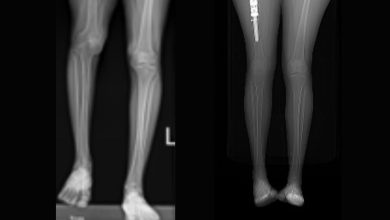
Hadassah doctors rebuild and lengthen leg using 3D printed implants
Doctors at Hadassah Ein Kerem in Jerusalem have reconstructed a patient’s hip joint and femur using two custom 3D printed implants, after a rare condition caused her bones to progressively…
-
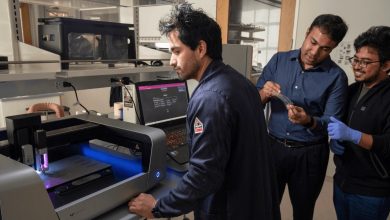
USC team prints MRI coils for just $30 per unit
MRI coils — specialized antennas placed against the body to detect radiofrequency signals from tissue — currently cost between $10,000 and $50,000 each. They require complex manufacturing and follow rigid…
-
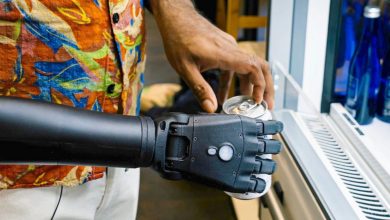
Open Bionics fits first 3D printed full-length bionic arm
Praveen Gowtham, a 43-year-old physicist from New York, has become the first person in the world to be fitted with a full-length, 3D printed bionic arm for above-elbow amputees. The…
-

Axtra3D launches KeyModel Ultra Ivory resin for dental and orthodontic applications on Lumia X1
Axtra3D has introduced KeyModel Ultra Ivory, a high-precision dental resin developed in collaboration with Keystone Industries, and validated for use on the company’s Lumia X1 Hi-Speed SLA platform. The material…
-
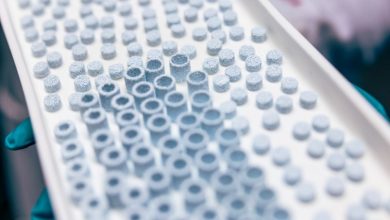
Tampere University researchers develop ceramic 3D printed scaffolds that replicate bone structure
Researchers at Tampere University in Finland have developed a 3D printed ceramic implant material that is designed to replicate the chemical composition and physical architecture of natural human bone. The…
-
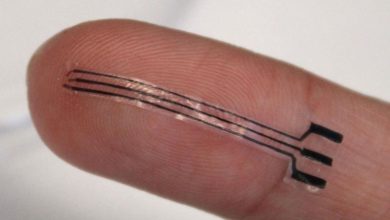
Penn State’s 3D printed hydrogel implant cuts blood pressure by 15% in trials
Researchers at Penn State University have developed a 3D printed bioelectronic implant that wraps around the carotid artery and delivers low-frequency electrical pulses to reduce blood pressure, and all without…
-
FIU’s Herbert Wertheim College of Medicine builds out 3D printing lab for anatomical and clinical training
A single printer and a handful of components sourced out of pocket have grown into a functioning medical fabrication facility at Florida International University‘s Herbert Wertheim College of Medicine. The…


