Trends 2026
The additive manufacturing industry will continue to evolve significantly in 2026, transitioning to an increasingly mature industrial production method for batches of thousands of parts. This phenomenon is not new; it has been happening since AM was invented. Parts with thousands of batches were already produced on 3D Systems’ largest SLA machines well over a decade ago. What’s changing is that there are now hundreds of these applications on many more machines, using many more materials (including thermoplastics). Soon enough, there will be millions. It’s an unstoppable trend.
While many individual companies struggle, the market as a whole will continue to grow robustly. All segments are increasing, even as some are finally showing initial consolidation. The result is not good news for companies that go out of business or need to merge to stay afloat. But it is beneficial news for those who remain, because a smaller overall number of competitors means more clients for them—especially if some of those competitors were making promises they couldn’t keep.
Those who are still in AM next year should be able to reap some of the benefits of this consolidation.
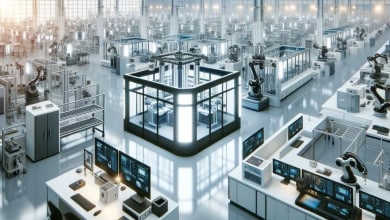
Growth is currently centered on a few different segments: one is the increasingly widespread (as far as AM technologies go) use of large industrial 3D printers, such as multi-laser metal printers and large (LFAM) or high-speed and highly automated (MJF, DLS, SLS) polymer machines, which are now common in more and more advanced factories. Their focus is now on how many parts can be reliably and repeatedly printed.
This trend is now driving massive material consumption.
The increasingly deep integration of automation and AI helps to increase production capacity. Additive manufacturing processes continue to become smarter, with AI software improving how prints are made, controlling settings, and creating intricate, lightweight designs that can’t be made with old methods. From robotic powder handling and post-processing to real-time quality assurance using in-situ sensors, automation encompasses the entire workflow. This greatly enhances the reliability and consistency of qualified and certified AM parts.
Building on lessons from recent global disruptions, companies will increasingly leverage additive manufacturing for on-demand production closer to the point of use, effectively reducing inventory risk and transportation costs. This localized production model, often facilitated by 3D Printing as a Service (3DPaaS) networks, offers a dynamic response to supply chain volatility. Additionally, specialized and valuable uses, such as bioprinting in healthcare, will become more practical, focusing on improvements in tissue and organ creation, custom implants, and medical tools that can be printed remotely to improve patient care.
Ultimately, the industry will experience a blurring of boundaries between additive manufacturing and conventional techniques, as hybrid manufacturing systems integrate additive and subtractive or formative processes into a single platform or workflow. This blending allows manufacturers to leverage AM’s design freedom for complex internal geometries while achieving the tight tolerances and surface finishes of machining or the productivity of injection molding and die-casting. In 2026, a big emphasis on digital security to safeguard important design information will make additive manufacturing a crucial and essential part of the modern, adaptable, and quick-responding factory of the future.
Scroll down for the latest AM Trends news [updating].
-

VoxelMatters launches pre-sale campaign for new polymer AM 2023 report
VoxelMatter’s market research division, VoxelMatters Research, a leading market analysis company specializing in tracking the global additive manufacturing (AM) industry, is launching a pre-sale campaign for its new comprehensive study…
-

Metal AM is dead, long live metal AM
According to most estimates, metal manufacturing represents roughly 25% to 30% of the $12 trillion (USD) global manufacturing market. Although these numbers are very broad, they do provide a clear…
-
Integration, expansion and smarter factories: AM in 2024
The time has come to start unwrapping the new year and look at what it may have in store for the additive manufacturing industry. We’ve asked several industry operators, leaders…
-

A wrap-up of Airtech’s larger-than-life Formnext 2023
As always, Airtech’s presence at this year’s Formnext in Frankfurt was noteworthy, partly thanks to their big, blue, hard-to-miss 3D printed tooling parts, but more so thanks to their collaborative…
-

Skyrocketing Bambu Lab leaves Creality in a sea of printers
Canada-based 3D printing news portal Fabbaloo has a unique understanding of the desktop 3D printing market. In the latest series of articles, Fabbaloo’s founder Kerry Stevenson looks at the rapidly…
-

The Metal AM market generated $2.85 billion (USD) +26% YoY in 2022
VoxelMatters Research, VoxelMatters’ market analysis branch, specializing in tracking the global additive manufacturing (AM) industry, is releasing its new comprehensive study on the metal additive manufacturing market. The “Metal AM…
-

Lithoz, 3DCeram and Desktop Metal lead Top 10 technical ceramic AM companies
To celebrate the official and full availability of VoxelMatters Research’s new report on the Technical Ceramic Additive Manufacturing Market (2022-2032), along with the first datasets available as standalone products, we…
-

EPO study shows 3D printing patent filing skyrocketed in last decade
A new report published by the European Patent Office (EPO) shows that innovation in additive manufacturing, also known as 3D printing, has boomed in the past decade. The free to…
-

Wohlers Associates publishes specialty report on Post-Processing
Wohlers Associates, powered by ASTM International, has published Wohlers Specialty Report on Post Processing: Final Steps of AM Part Production. The report focused on parts made by additive manufacturing (AM)…
-

FaithTech 3D Printing Report features orgs supporting humanitarian efforts
Emerging technologies like 3D Printing are transforming how companies serve people across the globe. FaithTech featured the work of numerous companies for their innovative approach to 3D Printing and its…


