AM for Space
Space additive manufacturing is going to have a key role in enabling the future of human space travel and interplanetary colonization. In fact, it is already playing a key role in enabling the production of low-cost satellites and lighter, more efficient rockets to take cargos into orbit.
Whether it will take another 10, 50 or 100 years for commercial space-based ventures to grow into one of the largest—if not the largest—manufacturing segments, we are already past the dawn of the commercial space age and we just experienced the dawn of the commercial human space age. Commercial space exploration or commercial planetary colonization will soon be within our reach, as several companies of various sizes are now creating viable business opportunities in space for satellites and the communication industry.
One of the most significant challenges that all these space ventures need to overcome in order to place satellites, probes, landers, telescopes or even spacecraft in orbit is the high per kilogram cost required to break free of the Earth’s gravitational pull. This means that for every additional kilogram of payload, mission costs can increase by several orders of magnitude because heavier or bigger payloads require larger and more powerful launch vehicles.
Additive manufacturing provides the most effective tool to optimize weight in systems built to reach space. This is true both for launch vehicles and—until the time when resources are gathered in space—for spaceborne systems and devices. Together with weight-optimized geometries, AM can help to greatly lower the cost of commercial space activities by continuing to drive the development of advanced materials, including metal replacement, high-performance polymers and composites.

Space, the initial frontier
Additional direct advantages can be derived from increased process automation for small batch series or single item production—which is a more relevant issue in rocketry and satellite manufacturing than in any manufacturing segment. This is especially true within the $120-billion commercial infrastructure and support segments—including the manufacturing of spacecraft, in-space platforms and ground equipment, as well as launch services and independent research and development. While the overall revenues will continue to represent only a minimal part of the overall space manufacturing industry, AM has the potential to be one of the key elements that will help the commercial space industry grow into maturity.
Further down the road, with more people traveling in Space, AM more and more production will take place in Space as well. Nowhere is production more distributed than outside of our planet, and no technology can deliver on-location, distributed manufacturing of complex part more efficiently than additive manufacturing. Getting to orbit, getting through space, and staying in space will only be possible through AM.
Availability of construction materials (e.g., metals, water) in space (on asteroids or on surfaces of planetary bodies) creates the possibility to additively build settlements and other facilities without having to take expensive and bulky prefabricated materials out of Earth’s gravitational field. Lunar and Mars regolith, for example, could be used to construct pressurized habitats for human shelter as well as other infrastructure (landing pads, roads, blast walls, shade walls and hangars for protection against thermal radiation and micrometeorites). Several NASA and ESA funded projects explored the concept of using various additive manufacturing techniques to build infrastructure on the Moon and on Mars.
Exactly how it will happen is the Focus of 3dpbm’s Aerospace AM Focus 2020 for this entire month. We have lots of great content coming up so stay tuned.
-
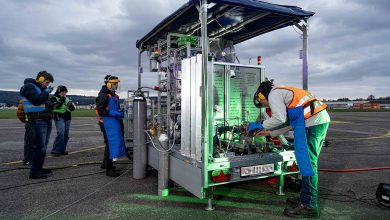
ETH Zurich students fire 3D printed copper detonation rocket engine
Students from the Aris Swiss student space initiative at ETH Zurich have produced stable detonation waves during ground testing of a Rotating Detonation Rocket Engine (RDRE), whose combustion chamber and…
-
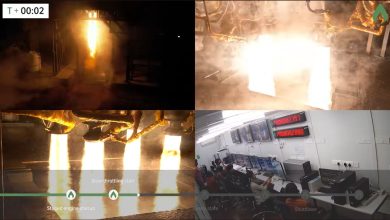
Agnikul Cosmos fires cluster of four 3D printed semi-cryogenic engines
Agnikul Cosmos, a private Indian space transportation company founded by IIT Madras alumni, has carried out what it claims is the first cluster firing of four semi-cryogenic rocket engines in…
-
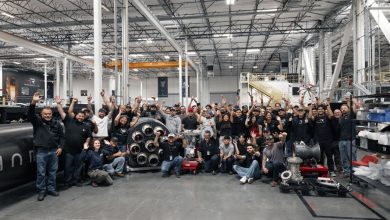
Rocket Lab rolls the 1,000th Rutherford engine off its production line
In line with its stated goal of launching 1,000 3D printed engines into space by year-end, Rocket Lab reached a production milestone for its Rutherford engine, completing the 1,000th unit…
-
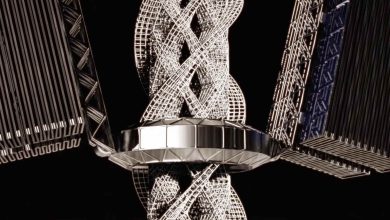
Branch Technology developing 3D printed 50-meter lunar towers for NASA
Based in Chattanooga, Tennessee, construction 3D printing company Branch Technology has been working with NASA since 2017, when it won the 3D Printed Habitat Challenge. Now, the company is continuing…
-
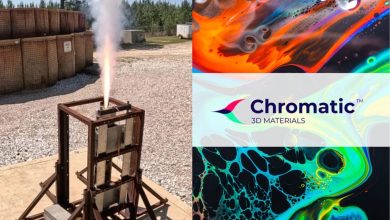
Chromatic 3D Materials completes static fire testing of 3D printed rocket propellant
Chromatic 3D Materials has successfully completed prototype printing and static fire testing of its additively manufactured rocket propellant at the Integrated Solutions for Systems (IS4S) test range in Opelika, Alabama.…
-
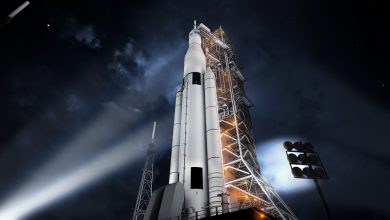
NASA’s Artemis cost overruns make case for greater adoption of AM in the future
The Artemis II mission to the Moon had the great benefit of reawakening many people’s passion for human space exploration and making it seem more within reach after half a…
-
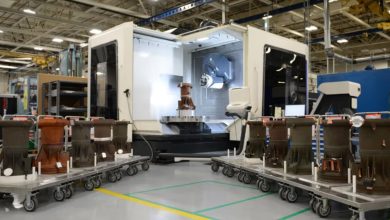
L3Harris uses additive manufacturing to cut satellite thruster lead times by up to 12 months
L3Harris Technologies has been shifting production of in-space satellite thrusters from conventional machining to additive manufacturing in a bid to reduce delivery times for US national security space programs. Thrusters…
-
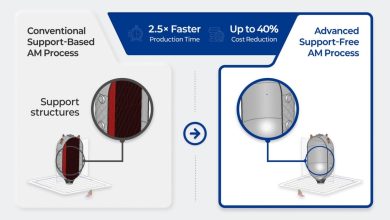
INNOSPACE becomes first in South Korea to commercialize support-free titanium 3D printing
INNOSPACE, a South Korean satellite launch service company, has become the first in the country to commercialize a metal additive manufacturing process that produces high-precision titanium components without support structures,…
-

UK Space Agency opens £14.7 million GSTP funding round for domestic development
The UK Space Agency opened a new funding round worth up to £14.7 million ($18.6 million) through the European Space Agency’s General Support Technology Programme, its flagship initiative for advancing…
-

University of Utah joins NASA-backed cold spray AM research for rocket engine alloys
The University of Utah, Penn State, and Colorado-based metal 3D printing specialist Elementum 3D have received funding through NASA’s Small Business Technology Transfer (STTR) Phase I program to advance cold spray…


