Aerospace AM
The aerospace industry has been among the earliest and most consistent adopters of additive manufacturing for final part production. Low production volumes, stringent weight requirements, and the structural complexity of modern aircraft and spacecraft make AM a natural fit—enabling lighter components through topology optimization, consolidated subassemblies, and geometries that conventional manufacturing cannot economically produce. Full-scale adoption remains constrained by the time and cost of qualifying materials, processes, and individual parts to aerospace standards, but hundreds of thousands of 3D printed components are already in service on civil and military aircraft.
The following overview draws on data from VoxelMatters’ Aerospace AM Market 2024 report, which provides a 10-year forecast and segment-by-segment revenue analysis of AM opportunities across the aerospace industry.
From commercial aviation to space and UAVs
In commercial aviation, OEMs, including Boeing and Airbus, use AM across prototyping, tooling, and increasingly low-volume serial production of metal structural parts. The MRO (maintenance, repair, and overhaul) sector has also adopted AM to accelerate spare parts supply and support in-field repairs, areas where the technology’s ability to produce parts on demand without dedicated tooling offers clear logistical advantages.
Civil space—covering launch vehicles, satellites, and space infrastructure—has become one of the most technically visible segments for AM. Metal powder bed fusion (PBF) and wire arc additive manufacturing (WAAM) are widely used in next-generation propulsion systems, and AM is also used in satellite structures, antennas, and components made in orbit. SpaceX, Rocket Lab, and Relativity Space are among the leading players driving adoption in this segment. Longer-term applications under development include space station components and in-orbit manufacturing capabilities.
Civil UAVs span a wide range of platforms, from hobby drones to commercial systems used in agriculture, logistics, infrastructure inspection, and last-mile delivery. AM is used across prototyping, low-volume airframe production, camera housings, sensor enclosures, and structural frames. MRO applications for UAV fleets are also growing, supported by the flexibility and speed of polymer-based AM processes.
The civil aerospace market segments carried indicative total market values in 2023 of $226–239 billion for civil aviation, $48–62 billion for civil space, and $10–16 billion for civil UAVs.
Obsolescence management and next-generation platforms
Defense aviation—encompassing fighters such as the F-35, bombers, transport aircraft, surveillance platforms, and rotorcraft, including the Apache and Black Hawk—uses AM primarily for managing parts obsolescence in legacy fleets and for prototyping and tooling in next-generation programs such as the B-21 Raider. The ability to produce low-volume replacement parts without re-establishing supply chains is one of the technology’s most operationally valuable applications in this context.
Defense space covers military satellites for communications, navigation, intelligence gathering, and missile defense, as well as early-stage space-based defense systems. AM is used for satellite structural components and missile propulsion parts, where the same performance-per-weight rationale that drives civil space adoption applies.
Defense UAVs—including platforms such as the MQ-9 Reaper and Global Hawk, used in reconnaissance, strike operations, logistics, and electronic warfare—represent one of the more advanced segments for AM integration. The technology’s ability to reduce part count and compress production cycles has made it particularly attractive here. General Atomics Aeronautical Systems (GA-ASI) and its use of Divergent Technologies’ DAPS (Divergent Adaptive Production System) platform stand as one of the most-cited examples of industrial-scale AM deployment in defense UAV manufacturing.
In 2023, the indicative total market values for the defense segment were $61–76 billion for defense aviation, $24–37 billion for defense space, and $12–15 billion for defense UAVs.
Part types and adoption drivers
Across all aerospace segments, 3D printed parts fall into three broad categories. Prototypes range from basic models to advanced functional systems, with desktop printers supporting early-stage engineering work and high-end industrial systems producing components for programs such as SpaceX’s Starship engines. Tooling—jigs, fixtures, composite lay-up molds, end-of-arm tools (EOATs), and custom drilling or forming tools—benefits from AM’s ability to handle the high degree of customization aerospace manufacturing requires; investment casting patterns and ceramic cores are also produced this way. Final parts in aviation include interior components such as seats and ducting, brackets, and electronic housings; in space, they include rocket parts, satellite bodies, antennas, optics, and propulsion systems; and in UAVs, they include airframes, lens housings, communication modules, and protective structures.
The primary drivers behind continued aerospace AM adoption include cost reduction at low and medium production volumes, tool-less manufacturing, lightweighting through both material selection and geometric optimization via topology analysis, localized production and reshoring of critical components, and faster development cycles through iterative prototyping.
All data cited in this article is drawn from the VoxelMatters Aerospace AM Market 2024 report. To order a copy, visit VoxelMatters Research. For executive summary requests or further information, contact francesco@voxelmatters.com.
-

SWISSto12 closes $70 million Series C to meet multi-orbit demand
SWISSto12 has closed a $70 million (€61m) Series C funding round, the Swiss satellite and payload manufacturer reported. The raise follows an $84.8m (€73.9m) award from European Space Agency member…
-

WAAM-based Vipra AM shows the power of application-first development
For over a decade, Italian company Caracol has developed and honed its large-scale robotic additive manufacturing technology, first with a focus on the thermoplastic and composite segment (with its Heron…
-
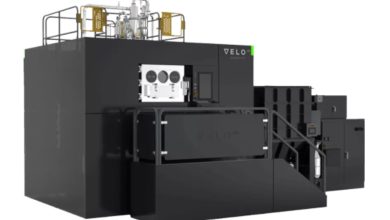
Mears Machine orders fifth Velo3D Sapphire XC to expand production capacity
Mears Machine Corporation has ordered its fifth Velo3D Sapphire XC metal additive manufacturing system, with options to purchase two additional units, Velo3D has confirmed. The Fremont, California-based printer maker said…
-
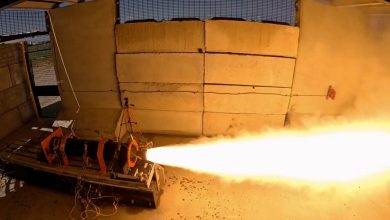
Ursa Major completes Navy solid rocket motor pathfinder program
Ursa Major has completed a Solid Rocket Motor (SRM) Manufacturing Pathfinder Program conducted with the U.S. Navy and the Office of Strategic Capital (OSC). The cost-share program concluded on schedule…
-

Protolabs expands CNC and 3D printing capacity for drone manufacturers
Protolabs has expanded its quick-turn CNC machining and 3D printing capabilities to serve drone manufacturers, as the company reported revenue from its drone customers has grown more than 90% since…
-

Auxilium bioprints first kidney and liver tissues in space
California-based Auxilium Biotechnologies has achieved a significant milestone: its AMP-1 orbital bioprinter has successfully bioprinted kidney and liver tissues in space. The 3D bioprinter was installed aboard the International Space…
-

Venus Aerospace raises $91m Series B to scale 3D printed detonation engine
Venus Aerospace has closed a $91 million Series B round led by Mercury Fund, a Houston-based venture capital firm, with participation from investors including Lockheed Martin Ventures. The round follows…
-

Coogee Titanium and University of Queensland to test locally made titanium
Coogee Titanium is partnering with the University of Queensland (UQ) on an AU$677,000 (US$469,000) research project to determine whether its locally produced TiRO powder can support a sovereign titanium supply…
-
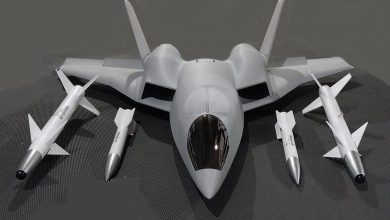
SkyDefense CobraJet series is built around a 3D printed carbon fiber core
SkyDefense, Inc., headquartered in Brighton, Colorado, has announced CobraJet, a vertical takeoff and landing (VTOL) jet designed to detect, track and neutralize hostile drones. The aircraft’s structure is built around…
-
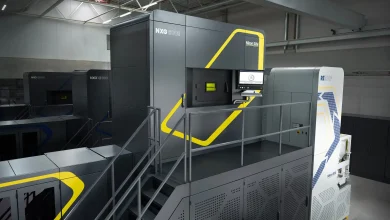
Beehive Industries orders multiple Nikon SLM Solutions NXG 600E systems
After placing the biggest order of EOS Onyx metal AM systems, Beehive Industries, an American provider of additively enabled manufacturing solutions for space and A&D, placed a multi-unit, self-funded order…


