
Protolabs expands CNC and 3D printing capacity for drone manufacturers
The company has added machining precision and struck an HP Additive partnership to meet surging demand from drone builders

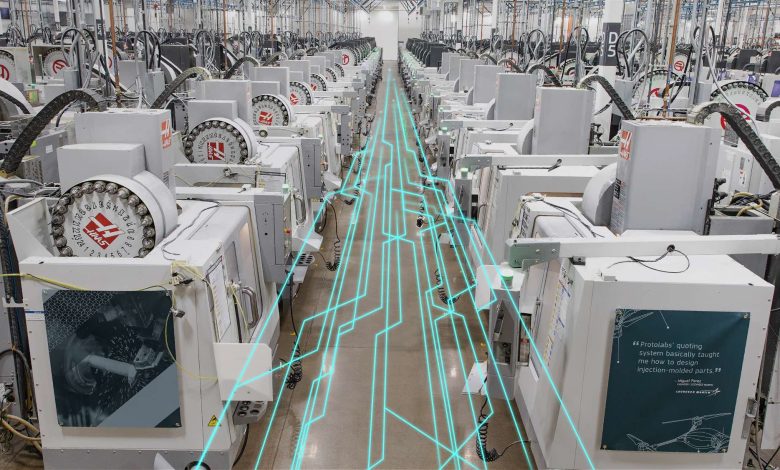
Protolabs has expanded its quick-turn CNC machining and 3D printing capabilities to serve drone manufacturers, as the company reported revenue from its drone customers has grown more than 90% since 2023, with a compound annual growth rate of nearly 40%.

The Minneapolis-based digital manufacturer said the expansion targets both commercial and defense drone programs, which increasingly require rapid iteration on custom parts.
Tighter tolerances for end-use parts
Protolabs upgraded its CNC machining capacity to produce end-use metal and plastic parts with tighter tolerances, greater precision and a broader range of functional and cosmetic finishes, delivered within days.
The company said the changes are aimed at the high-mix, low-volume production model common in drone development, where engineering teams iterate designs frequently and integrate customized payloads.
HP Additive partnership adds MJF capacity
Protolabs also expanded its Multi Jet Fusion (MJF) 3D printing capacity through a partnership with HP Additive, adding production capacity aimed at drone manufacturers. The MJF process produces thin-walled, near-translucent parts in Nylon PA-12, a material the company said offers a high strength-to-weight ratio, impact resistance and durability for rugged operating conditions.
Within drone manufacturing, the technology is commonly applied to ducts, housings, brackets and enclosures used in avionics cooling, field maintenance and payload integration.
“In this highly competitive industry, where drone developers are innovating at the speed of software, Protolabs is uniquely positioned to help accelerate that pace, delivering flight-ready parts in a matter of days instead of weeks,” said Suresh Krishna, President and Chief Executive Officer at Protolabs. “The advances we’re making in CNC machining and additive manufacturing are enabling tighter tolerances and lightweighting of parts for drone applications.”


