Sustainability
Additive manufacturing is inherently a means of production that could improve the sustainability of industries around the world. The very idea of producing by adding only the material needed, instead of removing material in excess, without the need of producing tools, could be a game-changer for the global environment. If fewer materials are needed, less are wasted. Producing parts when they are needed, and where they are needed can go a long way in reducing overall emissions from industrial production.
The match between AM and sustainability also goes beyond industrial production: the use of 3D printing in construction is emerging as a much more environment-friendly approach both in terms of workflows and materials used. This has obvious repercussions in the housing industry but also in renewable energy production.
However, the road to making AM a truly sustainable means of production is a long one. Currently, many metals AM processes are high-energy-intensive, many polymers AM processes still waste a lot of – often toxic – materials and construction 3D printing processes are still in their infancy. But new, more sustainable materials are already appearing on the market and the development of these materials is a key effort for many companies involved in AM.
The energy requirements for sustainability are a different matter. Much like with EVs, it depends on how the electricity needed to power 3D printers is produced. One evident example is Seurat. The company plans to mass-produce using its high-throughput metal PBF process which requires massive quantities of energy. The company’s goal is to produce that energy in a 100% sustainable way. And that’s the bottom line: if the electricity needed to run energy-intensive (mostly) metal 3D printers comes from renewable or clean sources, the impact of AM on emissions can be dramatically reduced. If, on the other hand, it comes from fossil fuels such as carbon, oil and gas, it is a different matter.
VoxelMatters’s view is that a true energy mix is required and that there are immediate ways to make carbon, oil and gas energy generation activities much cleaner than today, as global dependence on them is gradually reduced. At the same time, renewable energy sources are not a universal solution, as they are still dependent on polluting elements such as battery manufacturing and rare earths extraction. Next-generation nuclear fission reactors may be the cleanest source of energy that the world has access to while awaiting nuclear fusion. AM often plays a key role in accelerating their development by enabling the ability to produce complex, unique parts using the extreme materials needed to handle such power.
Finally, as the global economy continues to undergo dramatic contractions, supply chains are interrupted or broken, and raw materials become less accessible, a new opportunity is emerging to further develop AM into a way to produce more efficiently: digital, on-demand, additive and distributed manufacturing is now a serious and credible option. It may be the only option to tackle – in one shot – all the social, economic, health and environmental challenges that lie ahead.
-
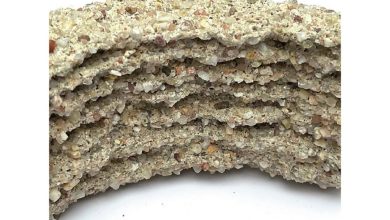
University of Stuttgart researchers 3D print bio-concrete structures using bacteria
Researchers at the University of Stuttgart have developed a 3D printing method for bio-concrete that uses live bacteria to bind compacted sand into load-bearing structures — without conventional cement. The…
-

Aalto University researchers use 3D printed panels to solve 6G coverage issues
Researchers at Aalto University have developed a class of passive signal-management devices — called metacrystals — that redirect radio waves around physical obstacles without requiring power, active tuning or control…
-

WASP completes Itaca sustainable 3D printed farm
Italian construction 3D printing company WASP has made big progress in the development of Shamballa, a utopian 3D printing laboratory and community where housing, food, healthcare, energy, and more will be…
-

How flax-linen and hemp are being used for biocomposite 3D printing
When we talk about composite 3D printing materials, we are often referring to thermoplastics embedded with carbon fibers or glass fibers. However, there are many alternative reinforcing agents that can…
-
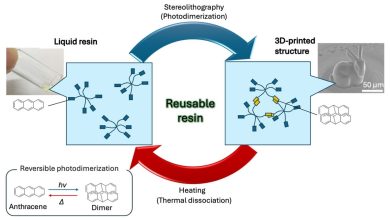
Yokohama researchers develop recyclable resin for high-precision 3D printing
Researchers at Yokohama National University in Japan have developed a photocurable resin for stereolithography that can be melted down and reprinted more than ten times, and with minimal material degradation.…
-

Colossal Biosciences hatches 26 chicks in 3D printed artificial egg system
Colossal Biosciences, a Dallas-based bioscience, genetic engineering and “de-extinction” company, has successfully hatched 26 healthy chickens using a synthetic incubation system built around a 3D printed plastic cup. The device…
-
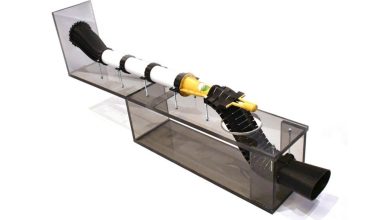
ORNL’s Manufacturing Demonstration Facility uses additive manufacturing to cut hydropower component costs
Fewer than 3% of the roughly 90,000 dams in the United States currently generate electricity, according to Oak Ridge National Laboratory (ORNL), and with around 51,000 of those classified as…
-
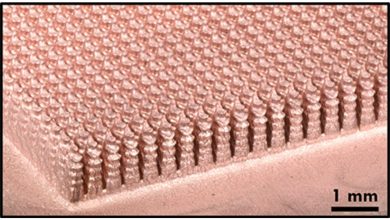
University of Illinois team 3D prints pure-copper cold plates for electronics cooling
Researchers at the University of Illinois Urbana-Champaign have developed a cold plate design workflow that pairs topology optimization (TO) with electrochemical additive manufacturing (ECAM) to produce pure-copper liquid-cooling components with…
-

Vitriform3D and ORNL use binder jetting to turn waste glass into building materials
Chicago-based startup Vitriform3D and the Department of Energy’s Oak Ridge National Laboratory (ORNL) have together developed a process for converting discarded glass bottles into 3D printed construction products using binder…
-

Joris Laarman’s 3D printed SYMBIO benches exhibited in NYC
Dutch artist Joris Laarman is no stranger to us. Focused on the intersection of craftsmanship and technology, Laarman has often used additive manufacturing as a tool to bring his visions…


