UpNano refreshes its brand for its eighth anniversary
A new identity for the next stage of growth


To mark its eighth anniversary, UpNano has introduced a new brand identity. The changes include a new logo, visual identity, website, and other customer touchpoints. According to the company, the rebranding is intended to better reflect its current activities and future direction. At the same time, UpNano emphasizes that the key elements of its business remain unchanged, including its team and its focus on high-resolution microfabrication at an industrial scale.
Building around two-photon polymerization
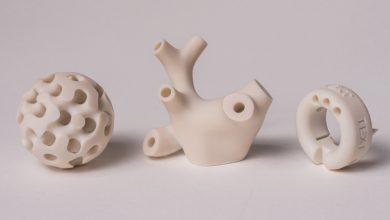
The foundation of UpNano’s technology remains two-photon polymerization, or 2PP. The technology uses ultrashort laser pulses to selectively cure photosensitive resin within the focal region of the beam, where two-photon absorption occurs. This enables the production of extremely small structures, freeform geometries, and components with dimensions reaching the centimeter scale.
Around its 2PP technology, UpNano has developed a platform that includes the NanoOne 3D printers, application-specific materials, and Think3D software, which provides a single interface for process operation and remote access. The company positions its solutions as a bridge between research applications and industrial production, combining high precision with the ability to increase process throughput.

From 3D printing to industrial production
The portfolio is complemented by UpScale, an industrial-scale production service for microcomponents. It includes automated workflows, process adaptation to different production volumes, and in situ printing. This allows UpNano to extend its activities beyond the sale of 2PP systems and offer customers access to production services.
Resolution below 100 nm
One of the key parameters of the platform remains resolution. UpNano states that the NanoOne Red achieves a resolution below 150 nm in the XY plane, while the NanoOne Green can achieve below 100 nm. The company defines this parameter based on the smallest line that can be printed and whose stability can be demonstrated by suspending it between two objects. The achievable resolution also depends on factors such as the microscope objective used, which in turn affects geometric accuracy and tolerance control.

Applications across multiple industries
Examples highlighted by UpNano demonstrate the range of applications it is targeting with 2PP technology. According to a reference published by the company, Mike Nikolaev of Roche reports that using the NanoOne system reduced the production time of a microfluidic device from several hours to a few minutes. In photonics, UpNano reports shape accuracy of below 20 nm for its microcomponents, along with lens surface roughness of up to 5 nm.
Another example comes from reproductive medicine. UpNano points to the ability to manufacture channels with a width of 0.05 mm for applications related to in vitro fertilization. The company associates the technology with a method that it claims can increase effectiveness by around 50%. These figures are based on the manufacturer’s own claims and should therefore be treated as company-reported information rather than independently validated clinical data.

Targeting research and industrial users
The range of applications listed by UpNano includes optics and photonics, medical devices, materials science, micromechanics, microfluidics, and bioprinting. The company also identifies potential applications in fusion energy. Its target customers range from industrial R&D departments and prototyping facilities to academic institutions and organizations interested in industrial-scale production.
A rebrand without a change in direction
UpNano’s rebranding does not represent a change in the company’s technological direction. The new identity is intended to reflect the development of its business, while 2PP technology and the NanoOne platform remain at the center of its activities. According to the company’s specifications, the NanoOne Green continues to offer a resolution below 100 nm in the XY plane, keeping high-resolution microfabrication at the core of UpNano’s offering.