OptiPowder 718 at the intersection of performance and sustainability
Continuum Powders’ Inconel 718 powder is made from 100% scrap metal using its M2P process

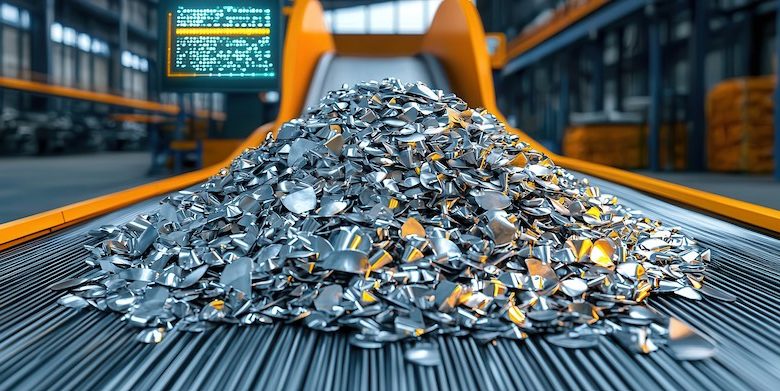
First developed a century ago, Inconel alloys have come to play a critical role in several industrial sectors, including aerospace, automotive, defense and energy. The family of nickel-chromium-based superalloys, which comprises alloys like Inconel 625 and Inconel 718, offers a combination of highly beneficial properties, including high strength, thermal resistance and excellent corrosion resistance, making it ideal for applications subjected to extreme conditions. It is therefore no surprise that Inconels were among the earliest alloys targeted by the metal AM industry, whose adopters were eager to combine the benefits of Inconel with those of 3D printing.
Inconel 718 in particular has become a key material for industrial AM users making high-performance components, but any of them would be quick to admit that not all Inconel 718 powders are created equal—especially when it comes to their carbon footprint. Continuum Powders, a metal powder producer based out of Texas, has brought to market a product that not only delivers on performance and printability, but also on the sustainable front: OptiPowder 718.
The material, which has been qualified for use by a number of metal AM hardware providers including Renishaw and Velo3D, is a product of Continuum Powders’ innovative melt-to-powder technology that converts scrap metal into high-grade metal powders. This technology, called Greyhound M2P, uses a DC plasma heat source to atomize and transform metal waste into high-quality spherical metal powders that are suitable for additive manufacturing, metal injection molding and laser cladding.

Prioritizing performance
The primary concern for manufacturers working with metal AM powders—and particularly powders made from reclaimed materials—is quality and performance. Continuum Powders’ unique M2P process ensures that its powders meet the high standards of industries like aerospace and energy. In the case of OptiPowder 718, mechanical testing has revealed a consistently high level of performance, particularly when printed components have undergone additional heat treatment.
In these tests, Continuum Powders’ Inconel 718 alloy has demonstrated an ultimate tensile strength exceeding 1300 MPa, a yield strength between 975–1005 MPa and elongation at break averaging over 22%. In terms of thermal resistance, printed parts made from OptiPowder 718 can withstand temperatures up to 1200°C (2200°F), making the powder suitable for critical components in aerospace and power generation, such as combustion chambers, turbine blades and rocket motors.
Printability matters
Continuum Powders also emphasizes that printability and flowability are key priorities in its powder production. Its proprietary plasma-based atomization process exerts tight control over particle morphology and size distribution, making for a reliable and consistent raw material for additive manufacturing processes.
In fact, OptiPowder 718 can be manufactured in a range of particle size distributions (PSD) for optimized performance in different AM processes, including laser powder bed fusion, electron beam melting and binder jetting. Testing performed on LPBF parts made using OptiPowder 718 revealed average part densities above 99.75% with optical measurements as high as 99.93%, proving the material’s viability for making dense metal components with high structural integrity.

Converting scrap
On top of the material’s high performance and printability, OptiPowder 718 offers manufacturers a more sustainable option for printing critical industrial components. Whereas traditional metal powders suitable for AM (particularly LPBF, which requires the highest quality of powder among metal AM processes) are made from virgin metal feedstock, Continuum’s powders are made entirely from vetted scrap derived from partners, who provide a reliable supply of traceable, high-quality raw materials.
Its Greyhound M2P platform effectively turns nickel alloy scrap (as well as other metal alloys like titanium) into high-quality powders that meet the stringent standards of adopter industries. This scrap undergoes pre-processing prior to atomization, including pre-treatments, cleaning and chemical analysis, which ensures that the powder output is pure and consistent.
Additionally, unlike other reclamation processes, M2P does not require multiple remelting stages, which significantly reduces energy consumption and associated costs without influencing performance.

A recent Life Cycle Assessment (LCA) of nickel powder production processes actually found that Continuum’s plasma atomization technique could reduce carbon emissions by up to 99.7% compared to virgin nickel powder production. The ecological benefits of reusing scrap metal should be obvious, as it completely eliminates any energy associated with extracting virgin metals from the earth. Moreover, reclaimed powders reduce reliance on global raw material supply chains, which can pave the way for more localized manufacturing models.
On an industrial level, Continuum’s process has already made a sizable impact. In the final five months of 2024 alone, it had successfully recycled 16,182 kilograms of nickel scrap, which it sourced from a Siemens Energy facility, showcasing the potential of a partnership based on circular production.
Where quality and sustainability meet
Continuum Powders has developed a technology capable of producing powders that deliver on sustainability and performance. Part of this ability is owed to the company’s five-part quality system, which ensures consistency and traceability from batch to batch. The five pillars are:
- Comprehensive quality assurance covering chemical composition, particle size and flowability checks
- Vetted scrap sourcing for high traceability and material integrity
- Pre-processing treatments like cleaning and etching to prepare scrap for atomization
- On-site analytical labs for real-time chemical and process control
- Managed logistics to ensure proper material handling and delivery
With this robust framework in place, Continuum Powders can guarantee that its OptiPowder 718 (and other powder products) meet ASTM standards for advanced manufacturing processes. Ultimately, consumables like OptiPowder 718 offer a compelling alternative to legacy powders and give end users the option to take productive steps towards greater sustainability in their part production.