Polymers
Additive manufacturing, 3D printing, or rapid prototyping, as it was called in the beginning, was invented as a family of technologies to shape polymers and make prototypes.
First, it was photopolymers with SLA stereolithography, and then thermoplastics, with FDM material extrusion and SLS powder bed fusion. Today, as the entire additive manufacturing industry transitions towards additive mass production, polymers and polymer hardware technologies are once again leading the way and remain at the forefront of the industry.
According to VoxelMatters’ latest Polymer AM Market report, based on an updated panel of 816, verified, individually surveyed and studied polymer AM companies, the core polymer AM market (hardware, materials and services) generated over $7.4 billion in 2024. The market is expected to grow to $46 billion by 2034 at a 20.1% CAGR.

Today polymer 3D printing processes can utilize various materials, including hybrid versions that span different material families and are each available in multiple forms. In 3D printing, these include three families of polymers: thermoplastics, photopolymers and thermosets. These can be 3D printed, as their forms include liquid resins, solid filaments, pellets and powders.
Generally speaking, polymers are materials made up of repeating units called monomers, which are linked to each other through chemical bonding. A single polymer molecule may contain millions of monomers, and each monomer requires a double bond or at least two functional groups to attach to two more monomers. The attached monomers also have functional groups to attract further monomers. This process is known as polymerization and creates a macromolecule or a polymer chain. The arrangement of the polymer chains determines the molecular structure of a polymer, and the arrangement can be either amorphous or crystalline.
Today, polymers are heavily used in 3D printing for conventional applications such as prototyping, physical modeling and tooling, but they are now also being used increasingly for serial production applications, primarily via LFAM/filament extrusion hardware farms, high-throughput powder bed fusion processes, and via high-speed photopolymerization processes with reactive materials.

Print&Live and iSCALE3D have put Arkan, a set of 3D printed airless wheels for unmanned ground vehicles (UGVs), through field and combat trials with Ukrainian Defense Forces units. A TARGAN…

ADDMAN plans to invest in 81 additional HP Jet Fusion 5620 Pro printers, with the purchase set to expand the company’s fleet of HP Multi Jet Fusion systems to more…

Researchers at Lawrence Livermore National Laboratory (LLNL) have developed a 3D printed solid-state bioreactor that converts waste methane into succinate, a chemical used to make polymers, stabilize drugs and add…

The National Institute of Standards and Technology (NIST) has made available Reference Material (RM) 8047, a standardized photoactive resin developed with the Photopolymer Additive Manufacturing Alliance (PAMA)—a joint initiative of…

A team led by RMIT University researchers has 3D printed a titanium lattice that floats and stays afloat even after severe damage–the first documented floating metal-hybrid lattice metamaterial. Hollow, interconnected…

To mark its eighth anniversary, UpNano has introduced a new brand identity. The changes include a new logo, visual identity, website, and other customer touchpoints. According to the company, the…
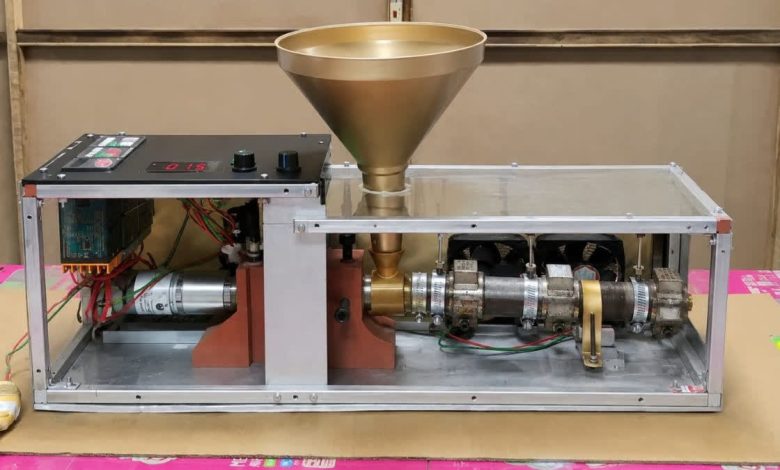
Researchers at the National Institute of Technology Rourkela have secured a patent for a low-cost, portable filament extrusion system that converts recycled plastic waste into composite filament for 3D printing.…
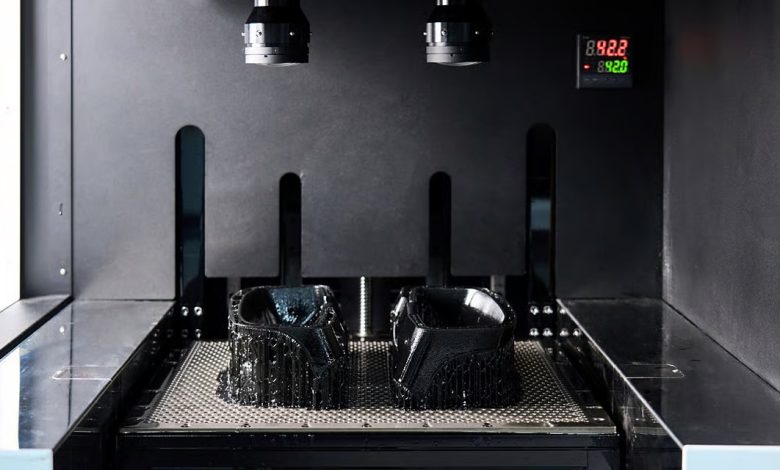
Hyundai Motor and Kia have opened the Additive Manufacturing Solution Center (AMSC) at their Namyang Research and Development Center in South Korea, marking the Group’s first purpose-built facility dedicated to…
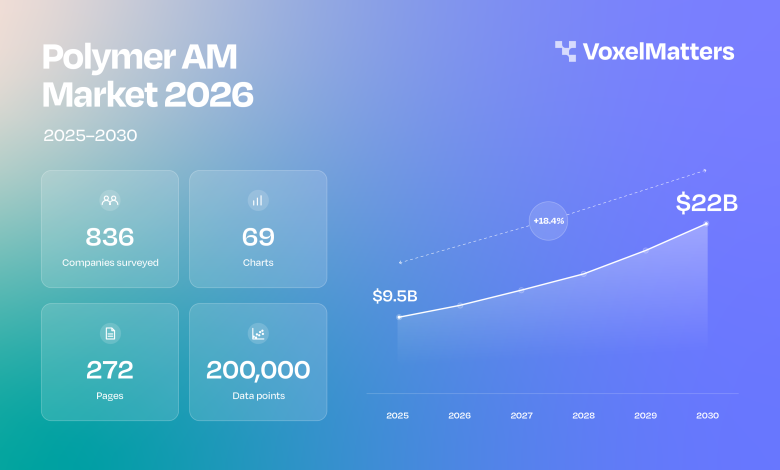
With several companies exiting the market or divesting—BigRep, Nano Dimension, Arburg, BASF and Braskem, among others—while others are experiencing rapid growth, there’s been growing confusion about which companies today represent…
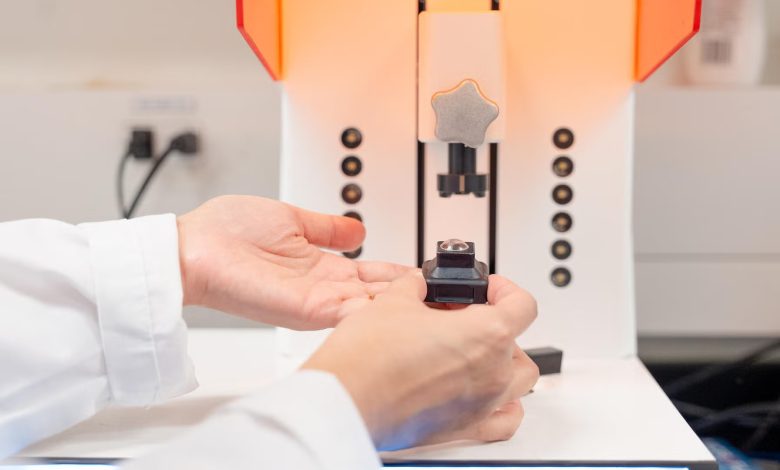
Researchers at the University of Waterloo’s Department of Chemistry have built a digital manufacturing platform that produces patient-specific contact lenses in as little as 20 minutes, according to the university. …


