British Army advancing 3D printed drone capabilities
Recent field-based workshop tested 3D printed UAV devices in Kenya, and time spent on the frontline in Ukraine has led to an increase in trained pilots

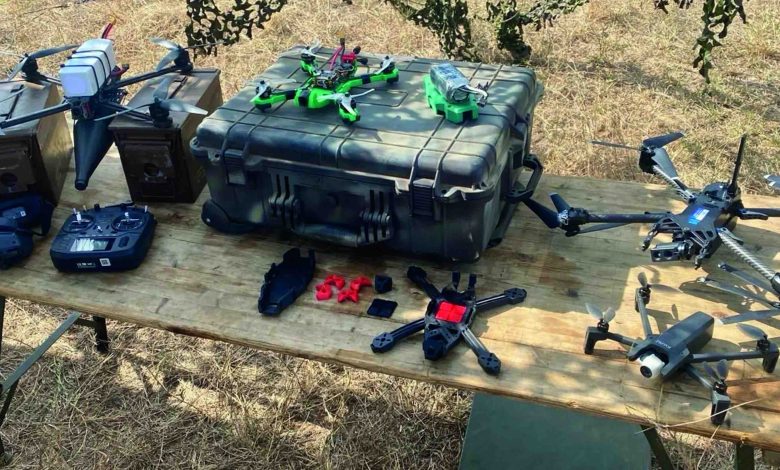
The British Army manufactured and deployed first-person view (FPV) attack drones in field conditions during Exercise Bull Storm in Kenya last summer, marking what officers described as a probable first for the service.
Soldiers from 3rd Battalion, The Rifles produced five complete FPV devices using portable 3D printers powered by field generators, assembling the weapons in a makeshift workshop made from a camouflage net attached to a Land Rover.
The exercise tested the viability of producing attack drones under combat-like conditions during 11 Brigade’s major test of reconnaissance-strike tactics near Nanyuki. Royal Electrical and Mechanical Engineers technicians printed drone bodies and attached batteries, cameras, and circuit boards at trestle tables to complete the assembly. Each drone took approximately three-and-a-half hours to print and another hour to assemble.
“We wanted to understand the impact of running power from a field generator to a 3D printer and how the environment impacts the whole process,” stated Major Steve Watts, Officer Commanding F Company, 3rd Battalion, The Rifles. They found that temperature management was a critical factor, with printers requiring shade during daytime operations to maintain optimal function.


The manufactured drones flew at 190mph for three-and-a-half minutes, covering ranges up to 15 miles. During the exercise, which involved approximately 1,400 soldiers, FPV drone attacks replaced much of what would traditionally have been artillery and mortar fire, tracked through Tes simulation technology.
Off-the-shelf FPV drones suitable for military purposes cost approximately £2,000 ($2,750) each, while field-assembled units cost around £400 ($550) per device. Shipping electronic components, batteries, and small ordnance also consumed less cargo space than transporting assembled platforms.
The exercise required special-purpose clearance from the Military Aviation Authority, which previously restricted in-field drone construction to racing activities inside military installations. Major Watts secured funding through the Commander Field Army’s Innovation Fund and partnered with the Edinburgh Drone Company to source hardware and train technicians.
The British Army’s in-house development of drone technology is in keeping with a general global military move towards in-the-field capabilities around 3D printed UAVs. The US Marine Corps recently got NDAA approval for a 3D printed drone that was designed, built and tested by its own personnel.
And the British Army is increasing not only its production capabilities, but its skillset too.
The Irish Guards have significantly increased the number of qualified UAV pilots in its ranks after a stint on Operation Interflex – the British-led multinational military operation to train and support the Armed Forces of Ukraine – last year.
“At the start of Interflex we had ten or 15 qualified UAS pilots – and now that’s nearer 70,” Lt Col Ben Irwin-Clark, CO of 1st Battalion, Irish Guards, stated to Soldier.
“There are 276 people in this unit – so around 25% of us are qualified.”


