3D printable architectural material developed from yeast
Chalmers University of Technology study produces bio-based wall tiles with tunable translucency, color, and surface texture using yeast-cellulose hydrogel

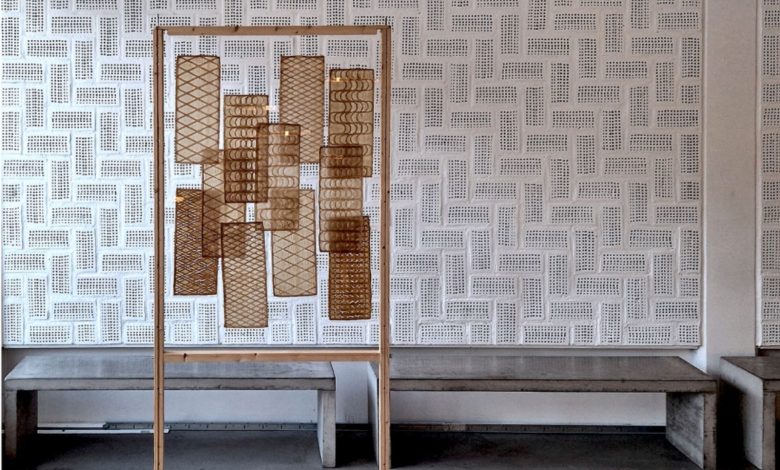
Researchers at Chalmers University of Technology in Gothenburg, Sweden, have developed a 3D printable biomaterial derived from baker’s yeast (Saccharomyces cerevisiae) and microfibrillated cellulose (MFC) intended for use as lightweight interior cladding.

The study represents the first known investigation into yeast as a building block in 3D printable architectural materials at a demonstrable scale.
The work was led by Yagmur Bektas and Malgorzata A. Zboinska of Chalmers’ Department of Architecture and Civil Engineering, alongside colleagues from the university’s Departments of Life Sciences and Chemistry and Chemical Engineering, and Aalto University in Finland.
Why yeast and cellulose?
Conventional construction materials — bricks, concrete, glass, and plastics — account for 30% of global raw material depletion and 33% of solid waste generation. Prior bio-based research in the field focused largely on bulky structural materials, leaving lightweight sheet solutions unexplored.
Baker’s yeast was selected for its rapid growth rate — a doubling time of 90 minutes — and its availability as a by-product of the brewing industry. Cellulose, sourced from wood waste and industrial pulp streams, provided viscosity and shape stability during extrusion.
Optimized formulations combined a 3% yeast solution, a 13% aqueous MFC solution, 1% sodium alginate, 5% glycerol, and water. Yeast was prepared in two forms: intact oven-deactivated cells, which acted as fillers, and homogenized oven-deactivated cells, which functioned as binders.


Thermogravimetric analysis indicated the formulations resisted complete thermal decomposition beyond 330°C, which the authors suggested may carry fire safety relevance for indoor use.
Large-format tiles measuring 20cm × 50cm were produced using a pressure-based extrusion system mounted on a KUKA Agilus KR10 industrial robot. Solid tile designs recorded surface area shrinkage of 6% and average three-dimensional deformation of 0.02 mm. Seventeen tiles were assembled into a vertical screen demonstrator displaying solid, perforated, and hybrid porosity configurations.
The authors identified further work required on long-term durability, moisture resistance, fire performance, and tile assembly methods before practical deployment. The study was published in Frontiers of Architectural Research.